
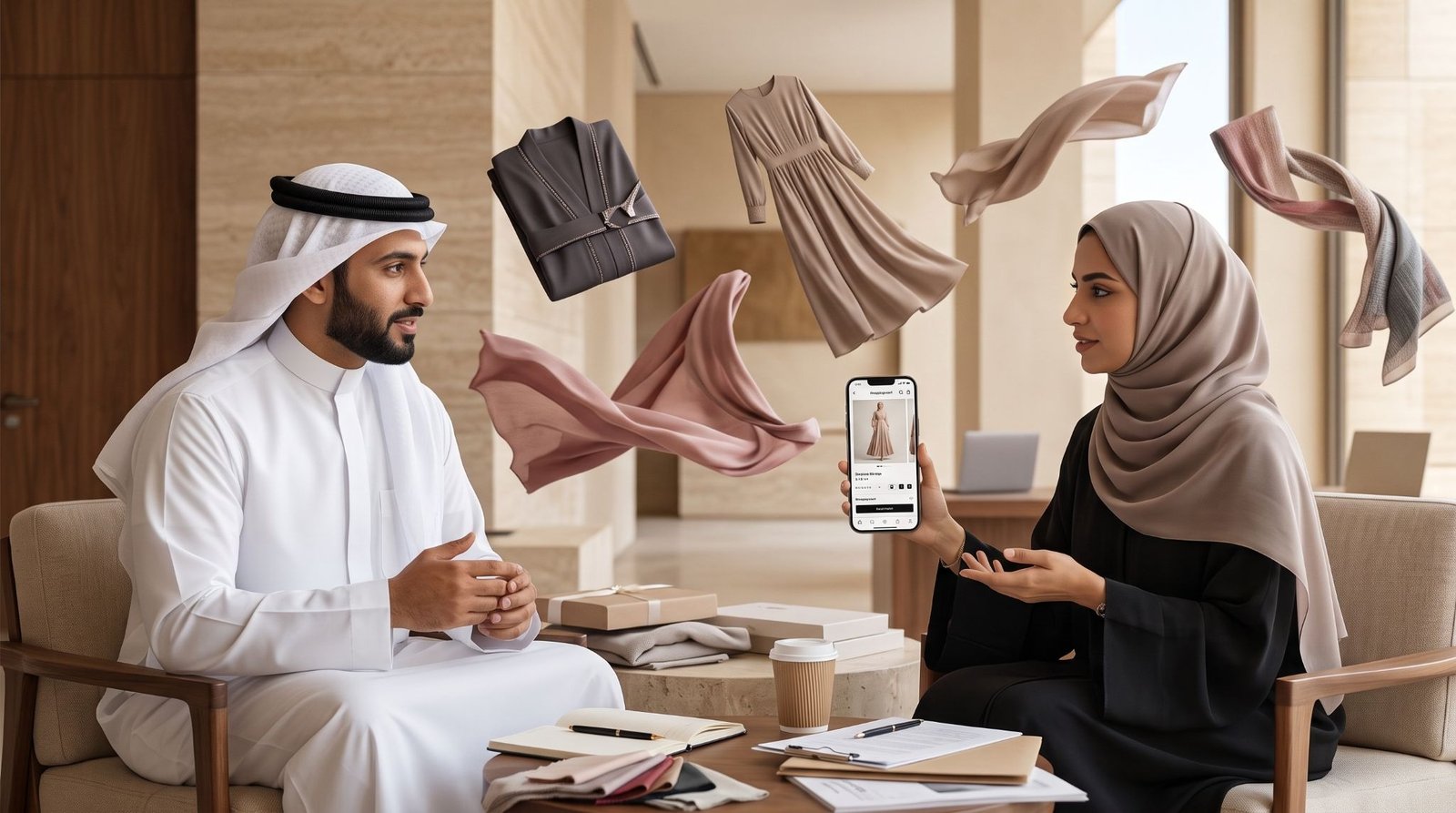
The Saudi online apparel market was worth about 8.59 billion US dollars in 2025, and Renub Research, a market research firm, expects it to nearly double by 2034. Plenty of shoppers, in other words, and most of them already buy clothes on their phones. So why do so many new clothing stores here go quiet within a few months?
Usually because the store looked finished and wasn’t. You’ve got an Instagram page, a supplier, maybe a payment link. What you haven’t got is a licence a payment provider will approve, a size chart that keeps returns down, or any plan for how customer number 50 finds you.
This guide follows the order you’ll actually run into things: what to sell, who to sell to, the legal side, sourcing, platform, building the store, shipping, costs, and your first customers. Starting from home with almost no budget? There’s a section for that too.
What Type of Online Clothing Business Should You Start in Saudi Arabia?
Pick your model before you pick a platform or a supplier. Get it wrong and you’ll spend months running a store that sells a little of everything to nobody in particular. Six models cover most of what Saudi founders start.
Online Boutique
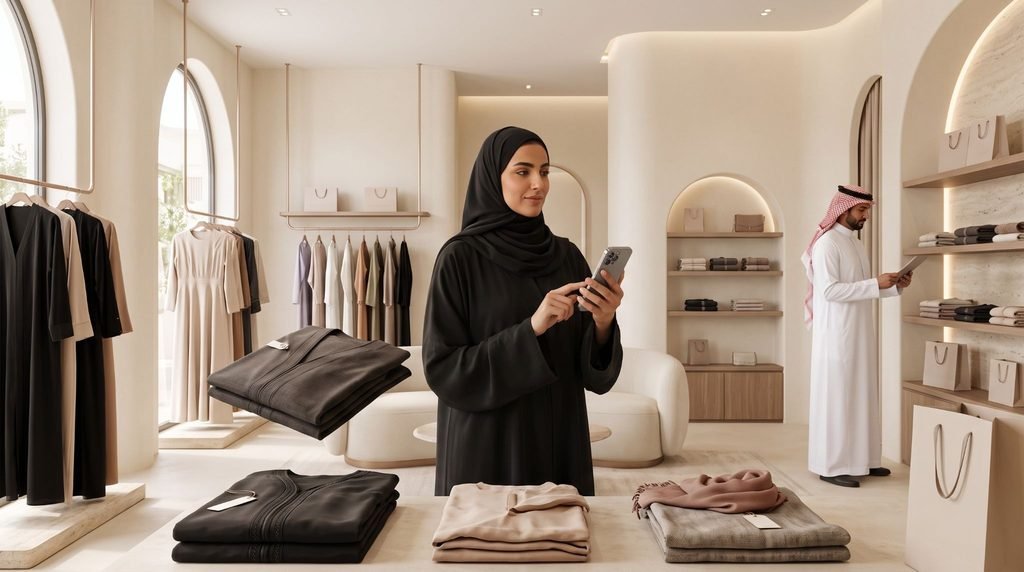
A boutique buys from wholesalers, brands or importers and sells a tight, curated selection under the founder’s own taste. The buying eye is the product here. Design skill barely comes into it.
Money is where it hurts. Every size that doesn’t sell sits on your shelf, and you paid for it before anyone ordered.
Best for: Founders with a strong fashion eye, a supplier contact, or a following that already trusts their taste.
Your Own Clothing Brand
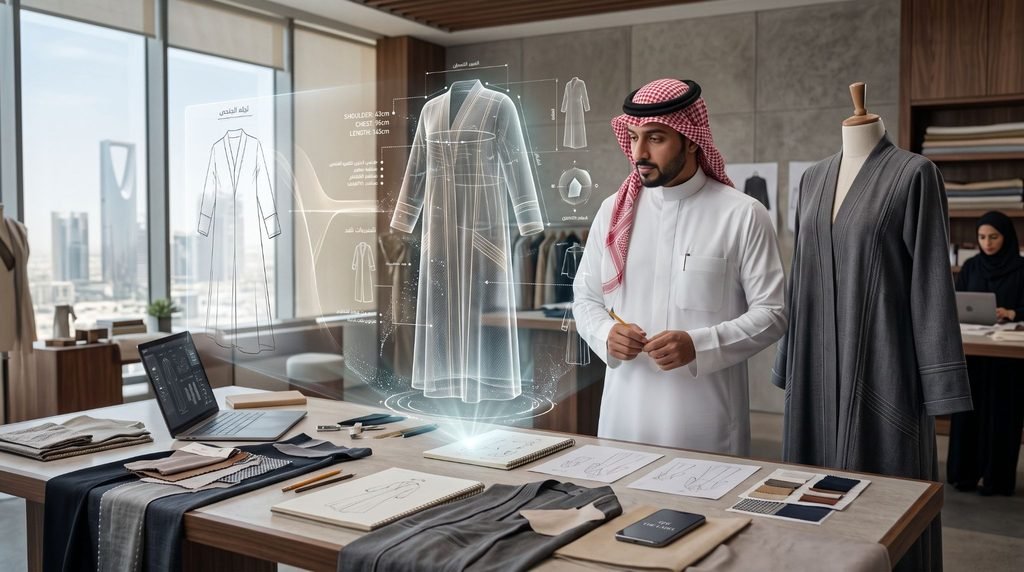
Starting a clothing brand online means you design the pieces and a local workshop, tailor or manufacturer makes them. Fit, fabric and pricing are yours, and so are the margins a reseller never sees. You’ll wait for them, though. Samples come first, then fit corrections, then minimum order quantities, and your first sale comes after all of that.
Best for: Designers with a clear point of view who can fund samples and a longer runway.
Pre-Order and Made-to-Order
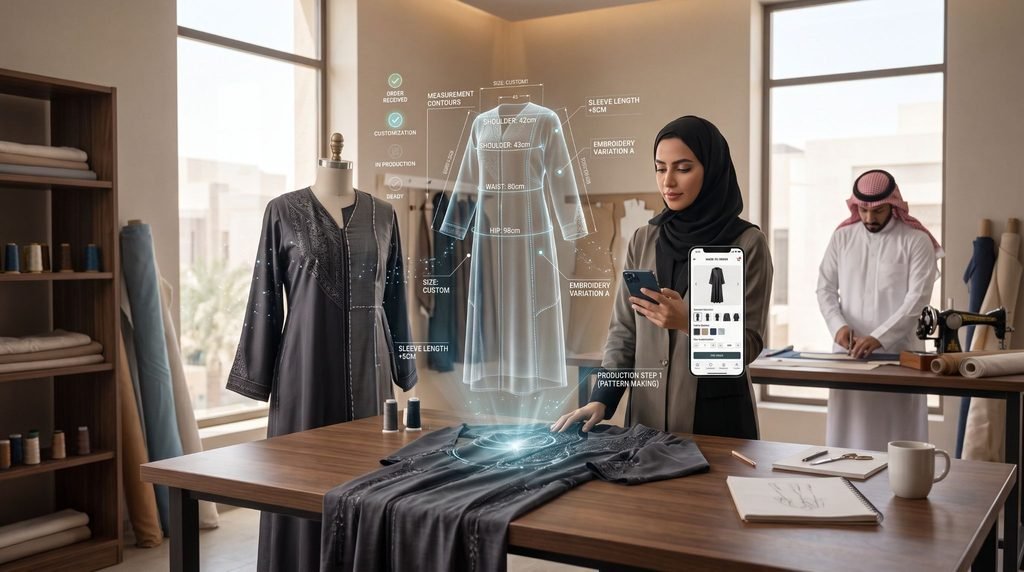
Pre-order flips the usual sequence. You show the collection, take orders, and only then place production with your tailor or manufacturer. Customers fund the stock, and you learn which styles sell before you’ve committed to them.
The catch is waiting time. If delivery runs past 15 days, unless you and the buyer agreed a different period, the customer has the right to cancel and get their money back. So put your delivery time at checkout, in plain words, before anyone pays. Global Compliance News
Best for: Founders with limited cash and a reliable local tailor or manufacturer.
Plus Size and Niche Boutiques
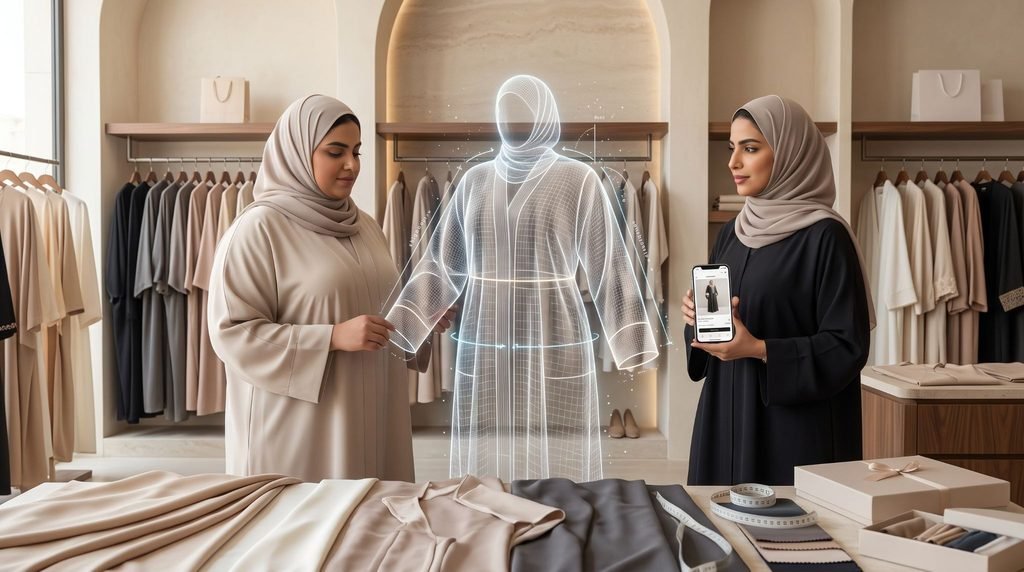
Some of the strongest stores in this category don’t try to compete on range at all. They serve one group the big stores overlook: plus-size women, tall men, maternity, kids’ occasion wear, swimwear for resort and travel buyers, workwear. A niche ranks for specific searches sooner and builds repeat buyers faster than a general store. It also makes sizing your most important content, so plan the size chart before the logo.
Best for: Founders who’ve felt the gap themselves and know exactly what the customer can’t find.
Modest Wear and Abayas
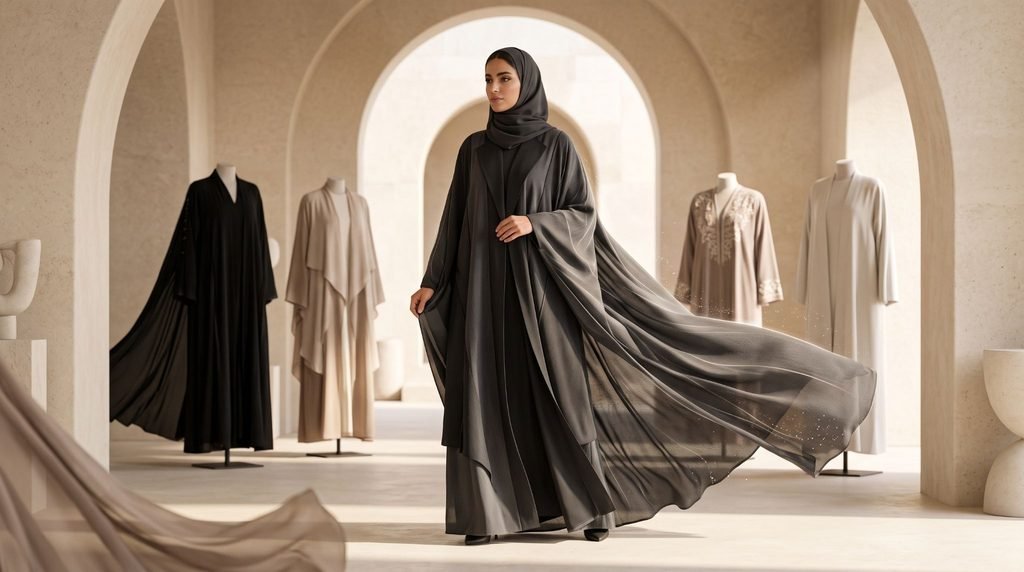
Modest fashion isn’t a side market in Saudi Arabia. Abayas, kaftans, modest workwear and occasion sets sell all year, then spike hard around Ramadan and Eid. Because so many stores compete here, a recognisable design identity or a real fabric and fit advantage matters more than in any other category.
Best for: Founders with design skill or a workshop relationship who can hold a distinctive look.
Research Your Saudi Customer Before You Buy Stock
A few days of research now can save you a season of unsold inventory. Start with who’s actually buying. Women hold the largest share of Saudi apparel spending, and the mid-range price band holds the biggest share of the market. That’s where the volume sits. It’s also where you’ll meet the most competition.
Pick a Specific Buyer & a Price Band
“Women aged 18 to 45” isn’t a customer. “Working women in Riyadh who need smart-casual pieces that survive a long office day and still look right at dinner” is. The tighter your description, the easier every later decision gets, from what you stock to how your photos look.
Choose a price band early too. Mid-range is the biggest market and the most crowded. A premium or budget position is often easier to own, if you can back it up with fabric, fit or service.
Study Your Competitors Like a Shopper
Spend an afternoon buying like a customer. Open ten Saudi stores in your category on your phone and watch what happens. How do they show sizes? How fast do the pages load? Does the Arabic read naturally or like a machine translation? What payment options show up at checkout, and what delivery time do they promise?
Then look for what they all do the same way. That’s usually where a new store can do one thing differently.
Plan Around the Saudi Fashion Calendar
Demand isn’t flat through the year. Ramadan and Eid bring the biggest spikes, especially in modest wear, gifting and occasion outfits. White Friday, Saudi National Day and Founding Day each pull in their own sale traffic, and summer travel changes what people buy.
Miss the window and you’ve missed your best weeks. Work backwards from each date: when the stock has to land, when the photos have to be done, when the campaign has to start.
How to Start an Online Clothing Store in Saudi Arabia Legally
| Requirement | What It Covers |
| Commercial registration or freelance document | Your legal right to sell |
| Maroof listing | Public store verification and trust badge |
| VAT and e-invoicing | Tax registration and compliant invoices |
| Store details and returns policy | What your store must display and honour |
| Customer data protection | How you store buyer details |
Starting an online clothing store in Saudi Arabia legally means sorting three things: your licence to sell, your store’s verification, and the consumer and tax rules you’ll operate under. Skip one and it usually surfaces at the worst moment, which is when you try to switch on payments.
Commercial Registration or Freelance Document
The Ministry of Commerce says online sellers need either a commercial registration or, where it legally applies, a freelance certificate. Which one you need depends on the size and nature of what you’re doing. Your registration’s activity list also matters, because payment providers check that it covers online selling when you apply.
A solo founder testing a small collection may qualify for the freelance route, which is issued through the Ministry of Human Resources and Social Development. Planning to hire people or hold real stock? A commercial registration gives you firmer ground. Foreign-owned entities also need an investment licence from MISA. Check with the Ministry of Commerce which route fits before you file anything.
Maroof Verification
Maroof is the Ministry of Commerce’s platform for verifying online stores. Registration is free and gives your store a public profile and a documentation badge. Shoppers look for that badge before they pay a store they’ve never heard of.
It also affects your launch date, since payment gateways commonly ask for a Maroof listing before they activate your account. And no, an Instagram-only shop doesn’t get a pass. The e-commerce law covers sellers on websites, apps and social media accounts alike.
VAT and E-Invoicing
Once your annual sales pass the mandatory threshold, you register for VAT with ZATCA and issue ZATCA-compliant e-invoices. Prices shown to shoppers should include VAT. Ask your accountant where you stand before launch, not after your first big sale week.
Store Details and Returns Policy
Your store has to display its name and address, contact methods including phone, email and website, and your commercial registration number. Then there’s the returns rule. Customers can return an unused product within seven days, and that right applies even when they’ve simply changed their mind.
For a clothing store, that makes your returns policy real operating information, not filler text. Put it on every product page and at checkout, and build your packing desk around actually honouring it. Getting this wrong is expensive: penalties include warnings, fines of up to one million riyals, suspension of your e-commerce activity, and blocking of the store.
Customer Data
Every order leaves you holding a name, a phone number and a delivery address, which puts you under the Personal Data Protection Law. Publish a privacy policy, keep access to that data limited, and know that if a hack exposes customer information, you have to report it to the Ministry of Commerce within three days.
Where to Get Your Clothes and Supplies
| Sourcing Route | Best For |
| Local wholesalers | Boutiques that want fast restocking |
| Importers and overseas suppliers | Wider range and lower unit prices |
| Local workshops and tailors | Private-label brands and made-to-order |
| Thrift and consignment | Resale and vintage stores |
Your supplier sets your margin, your delivery time and your quality, so choose one well before launch week. No single route is right for everyone. It depends on your model.
Local Wholesalers & Importers
Local wholesalers let you order small quantities and restock in days, so they’re the safest starting point for a boutique. You pay for that with thinner margins and the fact that a competitor can buy the very same pieces.
Importing widens your range and lowers unit prices, but you take on customs, longer lead times and bigger minimum orders. Check the current Saudi labelling and conformity requirements for your category before you import. A shipment held at the border can wipe out a whole season.
Workshops for Your Own Brand
Visit workshops and tailors in person. Ask for samples, wash them, and see how the fit holds after a few wears. Get minimum order quantities and production times in writing. A supplier who’s three weeks late costs you a launch date, and if that date sits before Ramadan, it costs you far more.
Supplies You Need Before the First Order
Buying stock is only half the setup. Before your first order ships you’ll want packaging (garment bags or boxes, tissue, tape), branded labels and hang tags, hangers, a steamer and a tape measure for consistent sizing, a phone tripod plus a mannequin or model for photos, a packing table, and a notebook or sheet for stock.
None of it is costly. Skip it, though, and it shows up in your photos and your unboxing, which shoppers judge before they judge the clothes.
Which Platform Fits Your Clothing Store: Salla, Zid, Shopify or Custom?
| Platform | Notable Features |
| Salla | Built-in Mada, STC Pay, Tabby and Tamara. ZATCA e-invoicing. Arabic right-to-left interface. Twilight themes. App Store |
| Zid | Vitrin themes. Merchant API. ZidPOS. Built-in SMSA, Aramex and Naqel shipping. Amazon Marketplace link |
| Shopify | Liquid themes. App Store. Multi-currency through Shopify Markets. Shopify POS. Shop Pay |
| Custom | Code written for your project. Direct ERP, warehouse and POS links. Any checkout or product logic |
Your platform sets the tools you work with every day: how you list products, how customers pay, how orders ship and how the store grows. Salla, Zid, Shopify and custom development can each run a clothing store. Each one works in its own way, so here is how each one runs and what it offers.
Salla for Clothing Stores
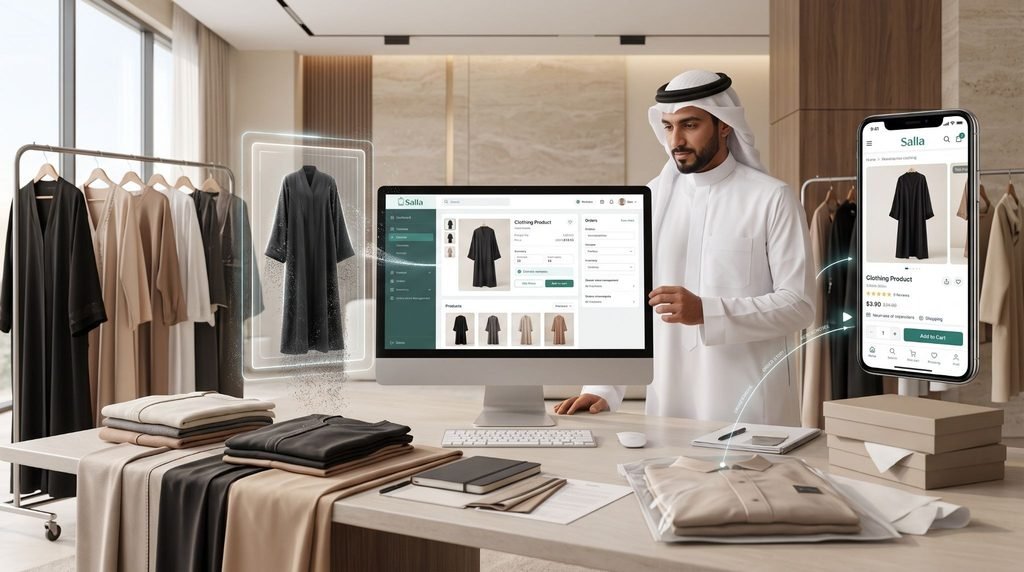
Salla is a hosted platform, so the store, the hosting and the security updates run under one subscription. Mada, STC Pay, Tabby and Tamara come built in, which puts pay-in-instalments at checkout from day one. ZATCA e-invoicing is built in, and the whole interface runs in Arabic right-to-left. Twilight is the theme engine that controls how the storefront looks, and the Salla App Store adds features such as reviews, loyalty programmes and dropshipping. Product options handle size and colour, and the Salla Special tier supports multi-branch stores and ERP connections. Salla also supports selling in markets such as the UAE and Egypt.
If Salla matches what your store needs, you can explore our Salla development services here to see what we build on it.
Zid for Clothing Stores
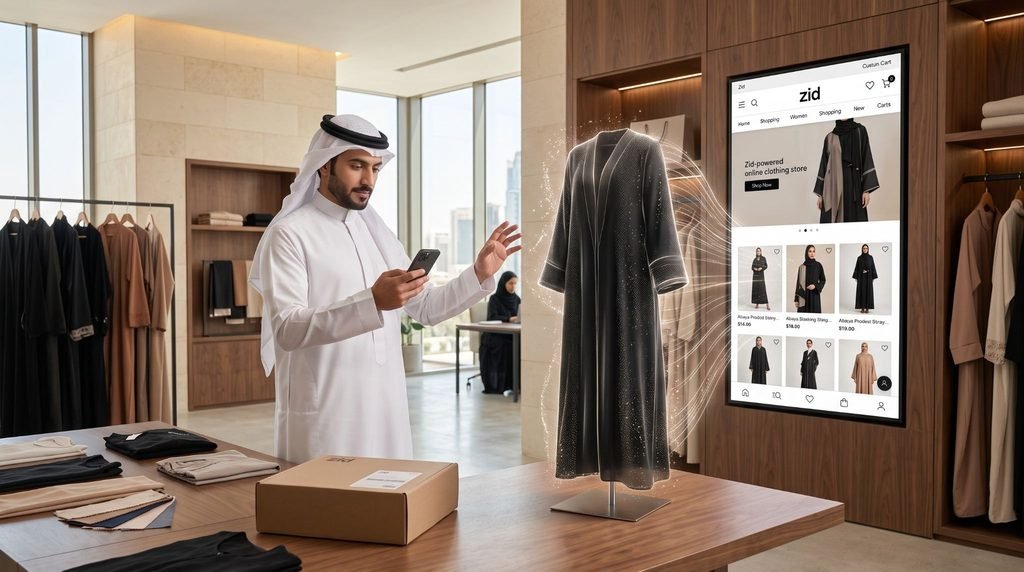
Zid runs its storefronts on the Vitrin theme engine, and the Merchant API lets developers connect outside systems to the store. Shipping is a strong point. SMSA, Aramex and Naqel connect directly, so a clothing order moves from checkout to tracking inside one system. ZidPOS links a physical branch to the online store, so stock and sales sit in one place. Social selling channels and an Amazon Marketplace link let a fashion brand list products beyond its own website.
Shopify for Clothing Stores
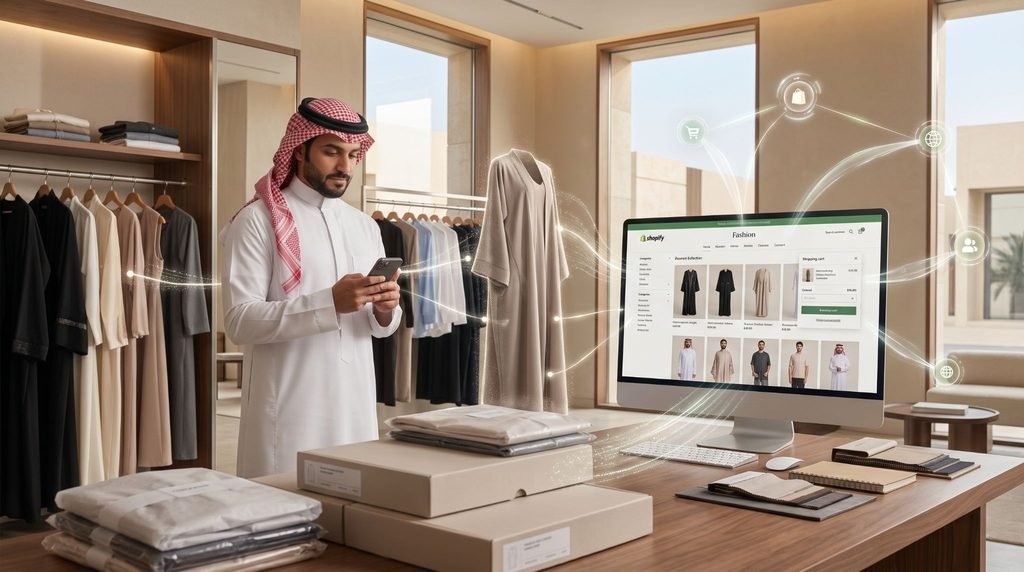
Shopify is a hosted platform built around its App Store and the Liquid theme language. Products carry variants for size and colour, with stock tracked for each variant. Shopify Markets manages multiple currencies and languages from one store. Shop Pay saves customer details for faster repeat checkout, and Shopify POS connects a physical shop to the same inventory. Saudi payment methods, Arabic right-to-left layouts and local shipping connect through payment gateway apps and theme work. We handle that setup for you.
If Shopify matches what your store needs, you can explore our Shopify development services here to see how we build on it.
Custom Development for Clothing Stores
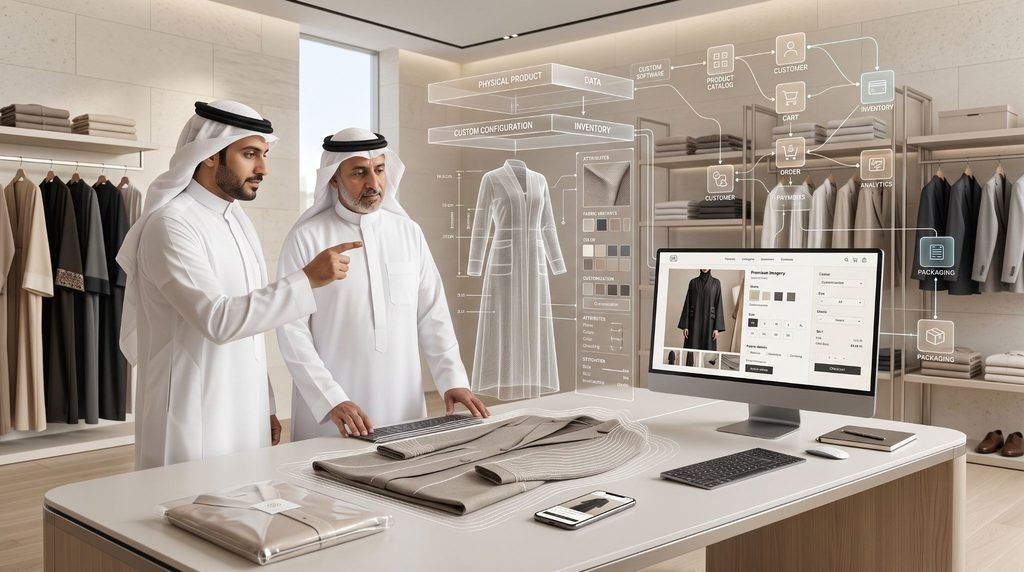
A custom store is written from scratch in tools such as React, Next.js, Node or Laravel. It connects straight to your ERP, warehouse system and POS. Checkout, product pages and pricing rules follow your own logic. That includes features such as a size-finder, bundle pricing or a loyalty system built around your customers. You own the code and the data.
Not sure which platform matches your range, order volume and systems? Talk to an Expert at Etihad Falcon Tech and we will map your requirements to the right platform.
How to Handle Shipping & Returns for Your Online Clothing Store in Saudi Arabia?
You handle shipping and returns by choosing a courier that delivers reliably across the whole Kingdom, building a returns process around the seven-day return right, and promising only the delivery times you can meet. They decide whether a first-time buyer comes back, and getting them wrong costs you reviews you can’t delete.
Choosing Couriers
Aramex is the shipping provider offered by most Saudi fashion e-commerce retailers, with SMSA and Naqel as common alternatives. Compare delivery times to Riyadh, Jeddah and the Eastern Province, and ask how each handles cash on delivery if you plan to offer it. Sign up with two couriers, so when one runs late your orders keep moving.
Build a Returns Process That Protects Your Margin
The seven-day return right means returns will happen, so build for them. Decide who pays return shipping, how you inspect returned items, and how quickly you refund. Log the reason on every return. If most say “too small”, your size chart is the problem, not your customers.
Packaging & Delivery Promises
Promise only the delivery time you can meet. When a delay is coming, say so before the customer asks. The law requires an online store to inform the consumer of any expected delays, and it’s simply better service anyway. A message saying “your order is a day late” costs nothing. A silent delay costs you the customer.
How Much Does It Cost to Start an Online Clothing Store in Saudi Arabia?
| Cost Area | Cost Level |
| Registration and licences | Low |
| Store platform and theme | Low-Moderate |
| Inventory | Moderate-High |
| Photography and content | Low-Moderate |
| Packaging and labels | Low-Moderate |
| Shipping and returns | Moderate |
| Marketing | Moderate-High |
There’s no single startup number, because two founders can open the same type of store on wildly different budgets. What matters is knowing where the money goes and which lines you control.
What Drives Your Cost Up or Down
- Inventory model: pre-orders and made-to-order push upfront cost down sharply. Buying a full collection before launch pushes it up.
- Platform choice: a Salla or Zid store costs far less to launch than a custom build.
- Content quality: a photographer and models cost more than shooting at home, but photos also decide how much you’ll spend on ads later.
- Product type: private-label pieces need samples and minimum orders. Resale doesn’t.
- Marketing plan: an influencer-led launch costs more than an organic one, and moves faster.
How to Get First Customers for Your Online Clothing Store in Saudi Arabia
Most new stores don’t have a traffic problem. They have a targeting problem. Sending just anyone to your store wastes money, so start where your specific buyer already spends time.
Instagram, Snapchat and TikTok
Saudi shoppers find clothing on Instagram, Snapchat and TikTok well before they open a website. Show real pieces on real people, in your own voice. Short videos of fit, fabric and styling outwork polished catalogue shots.
A micro-influencer with a genuine local audience often brings more sales than one expensive name, since her followers already trust her taste.
Google Search and Shopping
Someone searching “black abaya with embroidery Riyadh” wants to buy. Set up Google Search and Shopping ads for your best sellers and write product titles the way people actually type them. That’s where our digital marketing services team usually starts with a new store.
WhatsApp and Repeat Buyers
Ask every customer for permission to send new-drop and restock messages on WhatsApp. It costs almost nothing, and it’s the cheapest sale you’ll ever make. A second order from an existing customer needs no ad spend at all.
How to Run a Successful Online Clothing Store After Launch
| Metric | What It Tells You |
| Conversion rate | Whether visitors turn into buyers |
| Average order value | Whether bundles and upsells work |
| Return rate | Whether size charts and photos are accurate |
| Repeat purchase rate | Whether customers come back |
| Sell-through rate | Whether you bought the right stock |
Launch is where the real work starts. A store that sells for two weeks and then flatlines usually has an operations problem, not a marketing one.
Stock and Reordering
Reorder best sellers early and clear slow pieces before they age. Set a rule: if a style hasn’t moved after a set number of weeks, discount it and put the cash into something that sells. Dead stock is where most boutiques lose their profit.
Customer Service That Builds Reviews
Answer WhatsApp messages fast and settle problems without an argument. Ask happy customers for a review. One unhappy buyer who can’t reach you will leave one you can’t remove, while one who gets a quick, fair answer often orders again.
Common Mistakes When Starting an Online Clothing Store in Saudi Arabia
| Mistakes |
| Buying a full collection before testing demand |
| Selling through a personal account |
| Copying an English store into Arabic |
| Vague size charts |
| Ignoring Ramadan and Eid timing |
| No written returns policy |
| Promising fast delivery you can’t meet |
| Spending on ads before the store converts |
Why Choose Etihad Falcon Tech to Build Your Online Clothing Store in Saudi Arabia?
Etihad Falcon Tech builds Saudi online stores around how your customers actually shop and pay, then stays with you after launch until the store is selling.
One Team, From Store Setup to First Sale
Maybe you’re staring at three platforms and can’t tell which suits a clothing store. Maybe your store is live and people add to cart but never check out. Or the collection is strong and nobody’s seen it yet. These are the situations we work on every week.
We don’t hand you a template and disappear, we start with what you’re selling, who’s buying it and how they pay, then build the store around that.
Arabic-First, Not Translated
Your Arabic store gets built first, in proper right-to-left layout, with product pages written the way Saudi shoppers actually read. English comes second. Payments are set up for Mada, Apple Pay, STC Pay, Tabby and Tamara, and shipping connects to the couriers your customers already trust.
Compliant From Day One
Your store shows what the e-commerce law requires, your returns policy sits inside the checkout, and the setup is ready for Maroof and payment gateway approval. Better to build it right than to find the gap on launch day.
Built to Sell After Launch
Whether you go with Salla, Zid, Shopify or a custom build, we don’t stop at go-live. We connect the store to Google, Meta and TikTok so it starts pulling in customers, and we track conversion so you can see what’s working.
If you’re planning an online clothing store, or your current one isn’t selling the way its traffic should support, message us on WhatsApp and tell us what you’re selling, who you’re selling to and which platform you’re considering. We will tell you honestly which platform fits, what your launch needs and what to do first.
Frequently Asked Questions
How much does it cost to start an online boutique in Saudi Arabia?
There’s no fixed number. Add up registration, platform, your first stock order, photography and marketing, then shrink the biggest line, usually inventory, with pre-orders or made-to-order.
Do I need a commercial registration to sell clothes online in Saudi Arabia?
You need a commercial registration or, where it applies, a freelance certificate. Confirm which suits your size with the Ministry of Commerce.
Can I sell clothes only through Instagram or Snapchat?
Yes, but the e-commerce law covers social media sellers the same way it covers websites. Your licence, returns policy and store details still apply.
What’s the best platform to start an online clothing store in Saudi Arabia?
Salla or Zid suit most first stores because they’re built for Saudi payments and shipping. Pick Shopify if you’re selling beyond the Kingdom, and custom development once you need system integrations.
How do I start an online boutique with no money?
Sell pieces you already own, run pre-orders, or use a tailor for made-to-order items so you don’t pay for stock upfront. You still need your registration to take payments legally.
How long does it take to launch?
Building the store takes days to a few weeks. Registration and payment activation set your launch date, so start them first.
What are the return rules for online clothing?
Customers can return an unused product within seven days. Publish your policy clearly and refund promptly.
Where do I buy clothes to sell?
Local wholesalers for quick restocking, importers for wider range, or local workshops for your own brand. Order samples first and check quality after washing.
Do I need to register for VAT?
Yes, once your annual sales pass ZATCA’s mandatory threshold. Ask your accountant to confirm your position before launch.