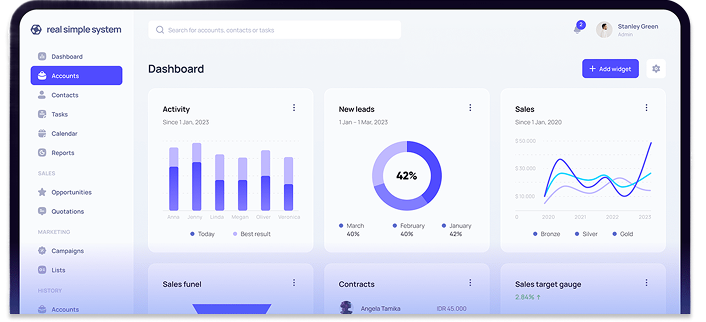
Every lost deal has a story. Usually it’s the same story: the follow-up that didn’t happen, the customer history nobody could find, the lead that fell through the gap between two departments. A CRM doesn’t just organize customer data — it closes the gaps where revenue leaks. We build custom CRM systems for businesses in Saudi Arabia that have outgrown spreadsheets and generic tools.
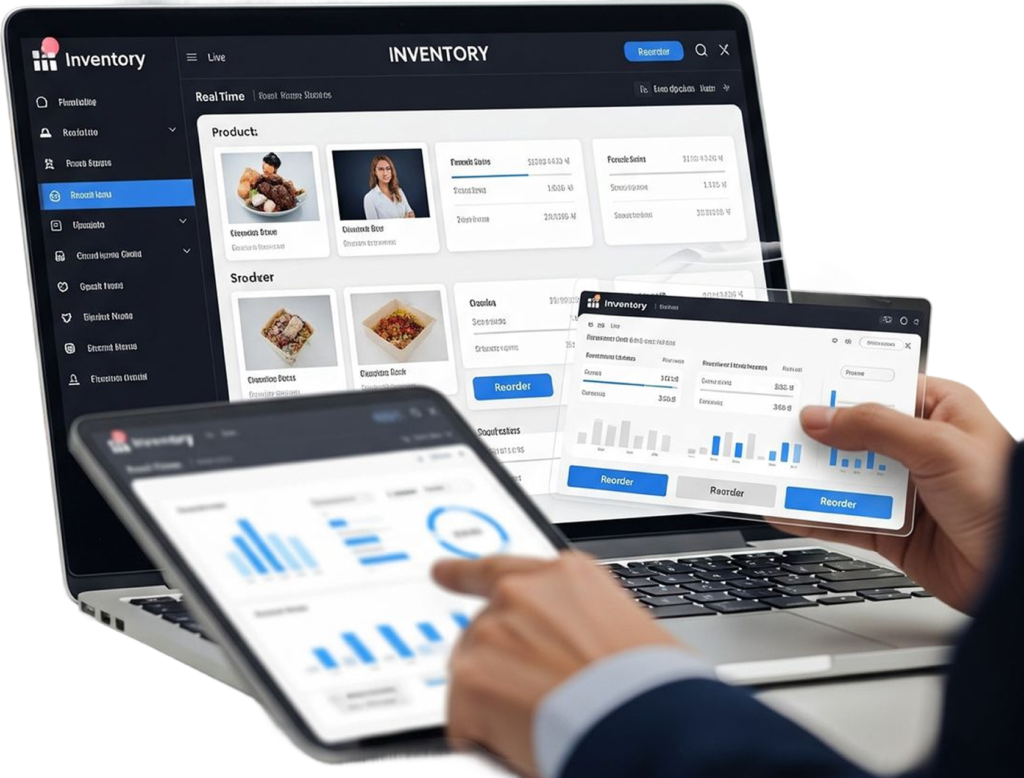


Before we build anything, we map your sales cycle, your customer journey, and your team’s current workflow — including the parts that are broken. Most CRM implementations fail not because the software is wrong but because it was designed for a generic sales process, not the specific one your team actually runs. We design your CRM around how your business works.

We build CRM systems from scratch — with the pipeline stages, automation rules, reporting views, and user permissions that match your exact workflow. No unused modules. No features that don’t apply to your business. Just a system your team will actually use because it was built for the way they work.

Your CRM is most useful when it’s connected to everything else. We integrate your CRM with your email platform, your ERP, your payment systems, your marketing tools, and any third-party APIs that carry customer data — so your team has the full picture in one place.

If you’re currently running customer data in a legacy system, a fragmented set of spreadsheets, or a CRM that no longer fits your business — we migrate everything cleanly to a modern platform. No data loss. No downtime. No starting over from scratch.

Your sales team isn’t always at a desk. We build mobile CRM applications that give your team real-time access to customer data, pipeline status, and communication history from any device — so a customer conversation in the field is as informed as one in the office.

A CRM that isn’t maintained becomes a liability. We provide ongoing support — fixing issues, updating automations, adding new features, and ensuring your system keeps pace with how your business evolves.
The most expensive customers your business will ever have are the ones you lost because nobody followed up. A well-built CRM eliminates that. It tracks every interaction, reminds your team of every next step, and gives your sales and support leaders the visibility to see exactly where the gaps are — before they become lost revenue.
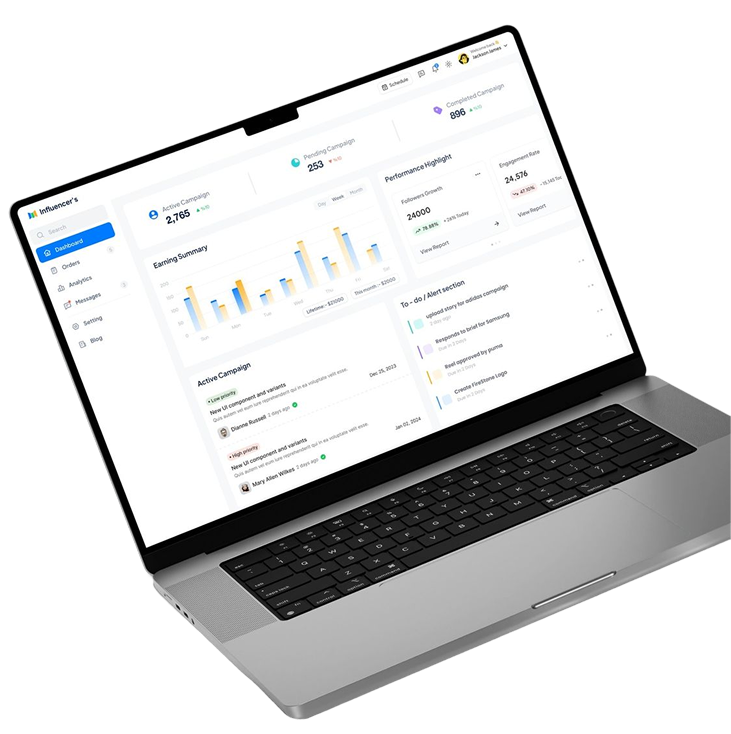
Businesses that use CRM well close more deals, retain more customers, and spend less time on administrative work. The difference isn’t the platform — it’s whether the platform was built around how the team actually works. That’s what we do.
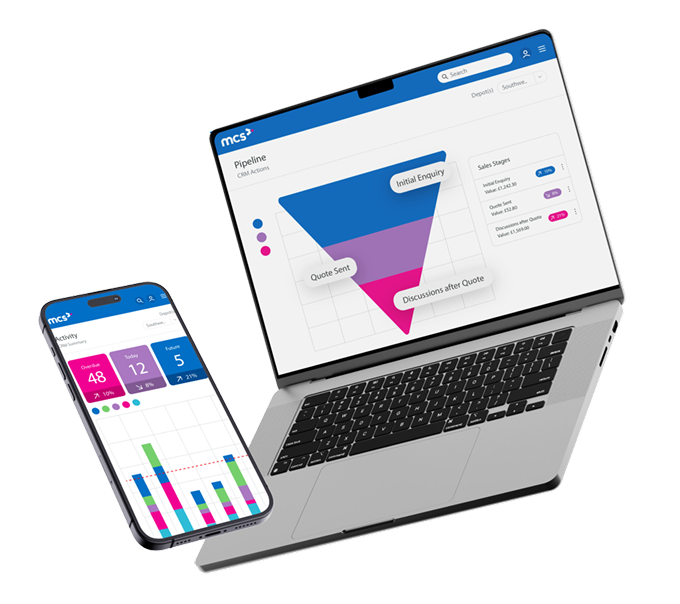

We start by understanding your customers and your sales cycle — not by presenting you with a standard CRM feature list. Every decision about what to build is driven by what will actually improve your team’s relationships with your customers.

No templates. No shortcuts. Every pipeline stage, every automation rule, every report is designed specifically around your team structure and your business model. The result is a system your team adopts because it was built for them.
From strategy and design to development, testing, deployment, and team training — we manage the complete CRM lifecycle under one roof. Your team doesn’t just get software — they get a system they know how to use.

A CRM that struggles when your customer base doubles is a problem you didn’t need. We build CRM platforms that grow with your business — handling more users, more data, more automations, and more integrations without performance degradation.
Every feature, every solution, built around what the businesses actually needed, earning 95% satisfaction across every industry we’ve served.


We monitor your CRM system continuously — response times, data sync accuracy, automation reliability — to ensure your team always has a fast, accurate experience.
Integration failures, broken automations, data sync errors — we identify and resolve CRM issues before they affect deals in progress or customer relationships at risk.
Your sales process evolves. Your CRM should too. We add new pipeline stages, refine automation rules, build new report views, and optimize user interfaces as your business changes.
As your customer base grows and your team expands, we scale your CRM — new user roles, new pipelines, new automation layers, and new integrations to support every stage of your growth.
A CRM that doesn’t match how your business actually runs becomes another tool your team works around. We build in stages — understanding your operations first, then structuring the system so adoption isn’t a fight.
We map your sales cycle, your customer journey, and your current process gaps before designing anything. The goal is understanding exactly where deals are won, where they’re lost, and what the CRM needs to do to change that — not presenting a standard feature list and hoping it fits.
Data model design, integration architecture, user role structure, and automation framework — all planned before development begins. A CRM built on the wrong data structure creates more cleanup work later than it saves now.
A CRM that’s difficult to use doesn’t get used — your team goes back to spreadsheets within weeks. We design interfaces that make data entry fast, pipeline visibility clear, and adoption something that happens naturally instead of something we have to push for.
Built in stages with regular review. Core pipeline first, then automation, then integrations, then reporting — so each layer is stable before the next is added, and problems get caught while they’re still small.
We test across every user role, every integration point, and every automation rule — using real scenarios based on your actual sales process, not generic test cases that don’t reflect how your team works under a full pipeline.
Managed rollout with data migration, team training, and close support during the first weeks — when adoption is decided. A CRM nobody was trained on becomes a CRM nobody uses.
Post-launch, we collect team feedback and usage data to refine workflows, fix friction points, and build the features that drive adoption further. A CRM that stops improving after launch is a CRM that slowly stops getting used.
We don’t pick technology because it is popular. We pick it because it is right for your project, your users, and your business goals.






It depends on your business complexity and how standard your sales process is. If your process fits within what Salesforce or HubSpot offer, we can configure and integrate those platforms. If your workflow is more complex, or if you need deep integration with custom internal systems, a custom-built CRM is typically more cost-effective in the long run.
A focused custom CRM with core pipeline management, basic automation, and standard integrations typically takes 3 to 4 months. More complex systems with multi-department workflows, advanced automation, and multiple third-party integrations take longer
Yes. CRM integration with ERP, accounting platforms, and payment systems is one of the most common requirements we handle. Connection to Saudi-specific platforms and ZATCA-compliant systems is part of our integration work.
We handle data migration as part of every CRM project — including data cleaning, mapping, and validation. Your historical customer data, deal history, and communication records are moved accurately and completely.
CRM adoption fails when the system wasn’t designed around how the team actually works. Our discovery process is specifically designed to prevent this — we understand the workflow before we build the system. We also provide training and post-launch support to drive adoption.
Revenue shouldn’t leak through gaps your CRM should be closing. Tell us how your sales process works — we’ll build the system that makes it work better.