When your customers can’t check their order status without calling your team, when your suppliers submit documents through email chains, when your employees request leave through a form that ends up in someone’s inbox — that’s a portal problem. Every manual touchpoint that could be self-service is costing you time, money, and the kind of frustration that makes people stop doing business with you. We build custom portals that fix that.


Portal projects that start with a list of features instead of a user need end up with platforms nobody uses. We start by understanding who the portal is for, what they need to do, and what currently frustrates them — then design a portal strategy that removes that friction specifically.

We build portals from scratch — structured around your exact user roles, your data architecture, your approval workflows, and your organization model. A customer portal for a logistics company looks and works very differently from a supplier portal for a manufacturer. We build for your context.

A portal that doesn’t connect to your back-end systems is just a separate website. We integrate your portal with your ERP, your CRM, your payment gateway, your inventory system, and any third-party APIs — so the portal is a live window into your actual data, not a static display.

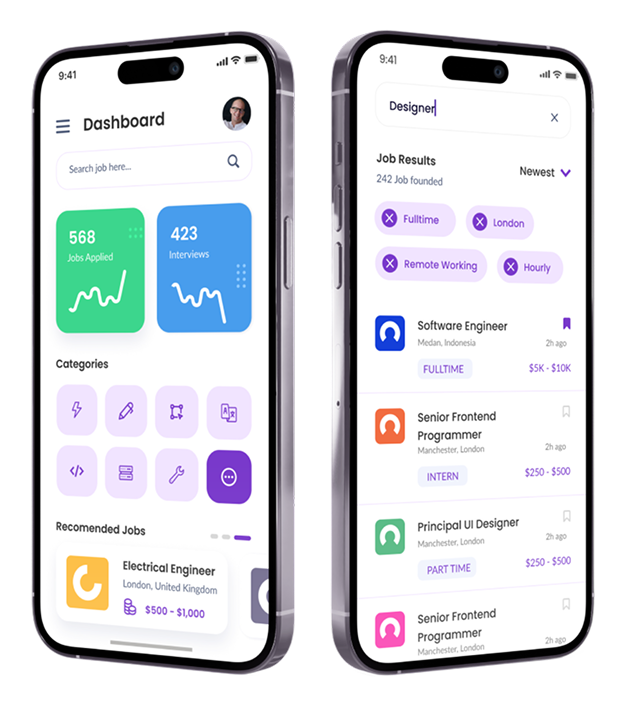
Portals accessed on mobile need to be built for mobile — not squeezed into a responsive layout. We develop mobile portal applications that give your users secure, real-time access to data, documents, and workflows from iOS and Android — designed for the way people actually use their phones.

If your existing portal is slow, difficult to use, or running on legacy infrastructure that’s become a maintenance burden — we migrate it to a modern platform cleanly. Data, user accounts, documents, and transaction history all transfer intact.

A portal that goes down during business hours fails the users who depend on it. We provide ongoing support — performance monitoring, bug resolution, feature additions, and security updates — to keep your portal reliable.
The operational cost of manual touchpoints is invisible until you calculate it. How many hours per week does your team spend answering questions that a portal would answer automatically? How many emails go back and forth for document submissions that a portal would handle in minutes? A well-built portal pays for itself faster than most technology investments.
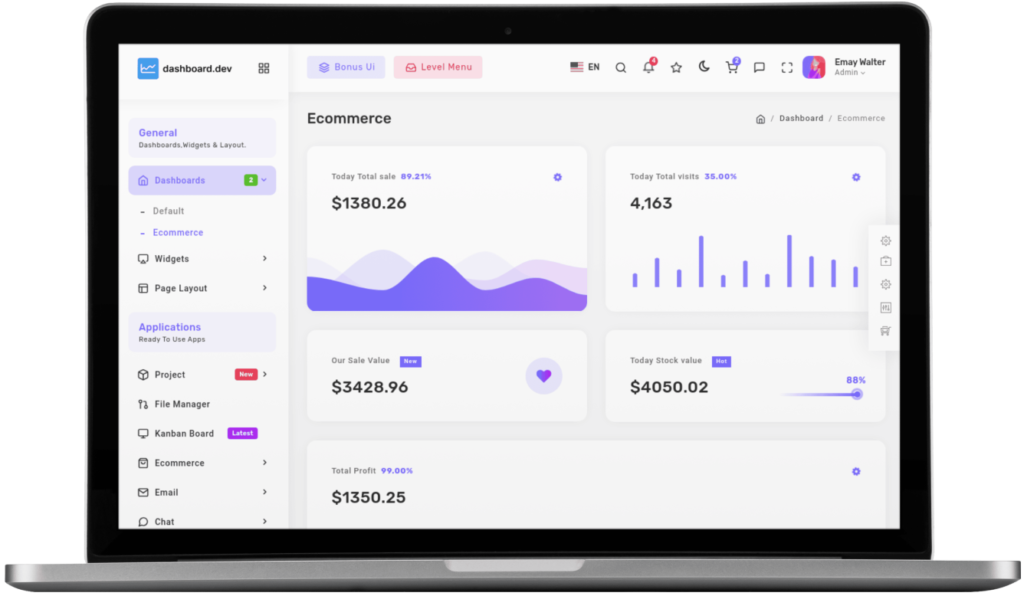
Organizations that have deployed self-service portals consistently report the same outcomes: fewer inbound inquiries, faster processing times, higher satisfaction from users who no longer need to wait for a human response. We build the portals that produce those outcomes.
A portal built for the organization but not for the user doesn’t get used. We design from the user’s perspective first — understanding what they’re trying to accomplish, where the current process frustrates them, and what a portal needs to do to be genuinely useful.

Your user roles, your data structure, your workflows, and your access requirements are specific to your organization. We build around them — no generic portal templates, no features that don’t apply.

Strategy, design, development, integration, testing, launch, and user training — managed as a complete project. Your users don’t just get a platform — they get a platform they know how to use from day one.

A portal that handles 500 users needs different architecture from one that handles 50,000. We build for the scale your portal will reach — with security, access controls, and audit logging built in from the start.
Every feature, every solution, built around what the businesses actually needed, earning 95% satisfaction across every industry we’ve served.


We monitor your portal continuously — load times, uptime, session performance, and data accuracy — to ensure reliable access for every user every time.
Access control failures, data sync errors, document upload issues — we identify and resolve portal problems before they escalate into user complaints or operational disruptions.
Portals improve when user feedback shapes them. We add new features, refine existing workflows, and optimize interfaces based on how your users actually use the platform.
New user roles, new modules, new integrations, expanded permissions — we scale your portal as your organization grows so it keeps serving your users effectively.
A portal built around a feature list instead of a real user need doesn’t get used. We start with the user, then build in stages so adoption is the outcome, not an afterthought.
We map your user types, their needs, their current frustrations, and the data and workflows the portal needs to surface. A portal designed around assumptions instead of actual user behavior produces a platform people route around, not through.
Role-based access model, data architecture, integration design, and security framework — all defined before development begins. Getting this structure right up front is what lets the portal scale to new user types later without a rebuild.
Portal UX is about clarity and task completion. We design for the user who needs to accomplish something specific and leave — not the one browsing for inspiration. Every screen earns its place by making a task faster.
Core user flows are built first, then integrations, then advanced features. Regular reviews with working builds throughout mean you’re seeing real progress, not a single reveal at the end of the project.
Tested across all user roles, all permission configurations, and all integration points — with security and penetration testing before any portal goes live. A portal handling sensitive data gets tested like one.
Rollout is managed with user onboarding, documentation, and close support during the adoption period. The portal’s first weeks live determine whether users adopt it or quietly go back to email and spreadsheets.
Post-launch usage data identifies where users struggle, which features get used most, and what the next development priorities should be. A portal that stops evolving after launch slowly stops being the first place users go.
We don’t pick technology because it is popular. We pick it because it is right for your project, your users, and your business goals.






Customer self-service portals, supplier and vendor portals, employee HR and self-service portals, partner portals, B2B ordering portals, government-facing portals, and internal operations dashboards. If it involves giving a defined group of users controlled access to specific data and workflows, it’s a portal — and we build it.
A website is public-facing and informational. A portal requires authentication and gives users access to data and functionality that’s specific to them — their account, their orders, their documents, their workflows. Portals are tools, not destinations.
Yes. Portal integration with backend business systems is typically one of the most important requirements. A customer portal that shows live order status, a supplier portal that pulls from your inventory system, an employee portal connected to your HR platform — these integrations are designed in from the architecture phase.
Every portal we build includes role-based access control, authentication (including MFA for sensitive environments), encryption at rest and in transit, audit logging, and session management. Portals that handle financial or personal data receive additional security architecture specific to those data types.
Yes. We build all portals mobile-responsive as standard. For high-frequency mobile use cases, we also build dedicated iOS and Android portal applications that offer a better experience than a browser-based interface.
Every manual process in your operation is a portal waiting to be built. Tell us which one is costing you the most — we’ll build the system that fixes it.