
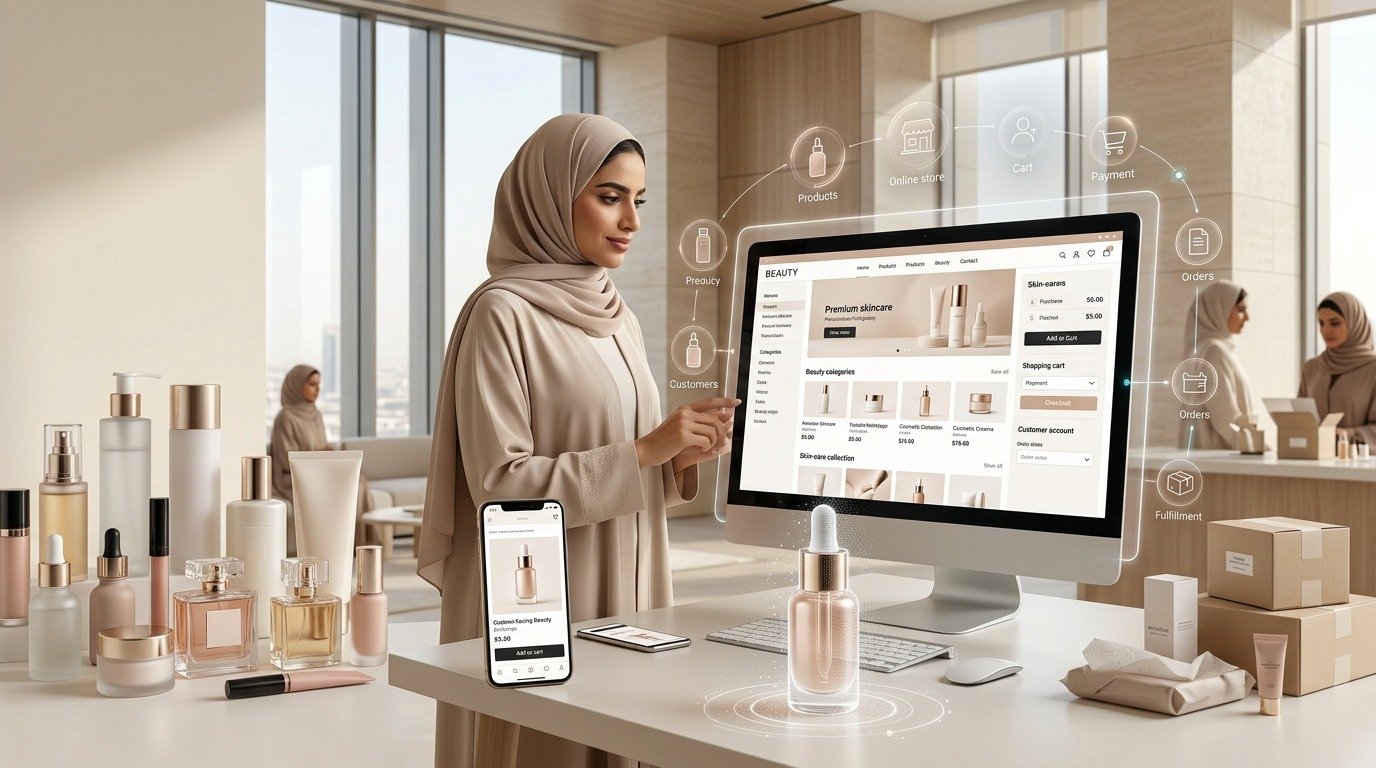
The Saudi beauty and personal care market is worth USD 8.03 billion in 2026 and is forecast to reach USD 10.84 billion by 2031, according to Mordor Intelligence. Online retail is growing faster than the market as a whole, at 7.65% a year over the same period. For a new beauty store, that means the demand is already there. Whether you get a share of it depends on how well your store is set up to take it.
Most people start by thinking about the launch: which platform to use, how to build the store, and how to connect payments. That work matters, and a store can be live within a few weeks. But launching is only the first step toward selling. Many stores go live, get a handful of orders, and then stay flat because the store loads slowly on mobile, the checkout loses buyers, or nobody outside the owner’s circle knows it exists.
A beauty store that sells well in Saudi Arabia depends on several things working together: the platform it’s built on, the technical setup behind it, the product pages, payments and delivery, and the marketing that brings buyers in and brings them back. If one of these is weak, it holds back the rest.
This guide covers each of them and how to get them right. It starts with how to start a beauty store online, including the business model, the legal requirements and the platform. It then moves on to building the store, shipping and delivery, and the marketing that turns visitors into repeat customers.
Is Selling Beauty Products Online Worth It in Saudi Arabia?
Yes, and the buying habits are already there. Beauty is a category Saudi shoppers already buy online, and the channels they use to do it are growing.
Social and chat commerce channels, such as WhatsApp and Instagram Shopping, are now the main starting point for online beauty purchases in the Kingdom. A shopper sees a product on social media, messages the store with a question, and orders there. To win that sale, you need someone ready to reply and a store ready to take the order.
Where the demand sits matters for planning. Riyadh holds the largest share of the Saudi beauty and personal care market, at 35% in 2025, according to PS Market Research. Delivery and campaigns for the capital are a sensible first focus.
Demand also rises at set points in the year. Ramadan and Eid are the biggest gifting periods, and mobile shopping peaks during them. A store that isn’t built and tested before then misses its busiest weeks, so plan your launch date around it.
You’ll also be up against established online retailers, and shoppers will compare your store with theirs. A clear focus, accurate product information and a store that works well on a phone give you a fair chance against them.
What Do You Need to Legally Sell Cosmetics Online in Saudi Arabia?
Before you choose a platform or order any products, check the legal requirements. New sellers often leave this until later, and it’s the step that can hold stock at the port or stop a product from being sold.
In Saudi Arabia, cosmetics are regulated by the SFDA (Saudi Food and Drug Authority). Companies have to notify their products to the SFDA through its Unified Electronic System, GHAD, before placing them on the market. This is called listing. If the application is accepted, the SFDA issues a listing certificate valid for five years. Imported products also need a Certificate of Conformity to clear the port. Foreign manufacturers must appoint a Saudi national or locally registered company as their legal representative to complete the process.
Who handles the listing depends on your business model. If you resell an established brand, the brand or its local distributor usually holds it, so ask to see it before you buy stock. If you launch your own line, the listing is your responsibility, along with the formulation, labeling and safety documents behind it.
The store itself has three more requirements. You need a commercial registration for the business. You need to issue ZATCA-compliant e-invoices, since every order is a sale that needs an invoice. And you need to handle customers’ names, addresses and payment details as the PDPL (Personal Data Protection Law) requires.
Requirements and systems get updated, so confirm the current steps with the SFDA and a licensed advisor before you order stock.
Three more things sit around the SFDA process:
- Commercial registration for the business itself
- ZATCA e-invoicing, since your store issues invoices from day one
- PDPL compliance for the customer data you collect at checkout
Check current requirements directly with the SFDA and a licensed advisor before you order stock. Rules and systems get updated.
Which Type of Online Beauty Store Should You Start?
Every online beauty store falls into one of a few business models. A business model is the way your store gets its products and sells them to customers. The model you choose decides what you’ll spend money on, what paperwork you’ll handle, how much of each sale you keep, and how quickly your store can go live.
Choosing the model before choosing the products matters because each model has a different way of working. Two stores can both sell face cream and still run as completely different businesses. The four models below cover most beauty stores in Saudi Arabia.
Reselling Established Brands
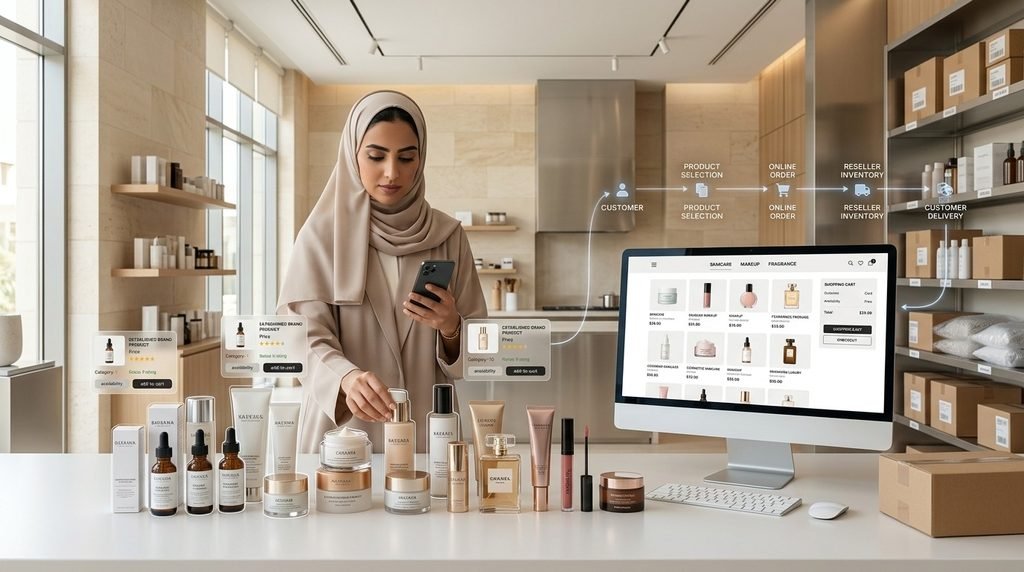
Reselling means you buy finished products from beauty brands or their local distributors, then sell them on your own store. The brand makes the product, and your store handles selling, marketing and delivery to customers.
Customers already know and trust these brands, so you don’t spend time convincing anyone the product is good. The brand or its local distributor has usually handled the product’s SFDA listing, so your main job is to confirm the listing before you buy stock.
The cost of this convenience is margin. Margin is the money left from each sale after you subtract what the product cost you. Because you’re buying at a set price and sometimes selling the same item as bigger retailers, your margin is smaller and customers can easily compare your prices with everyone else’s.
Launching Your Own Private Label
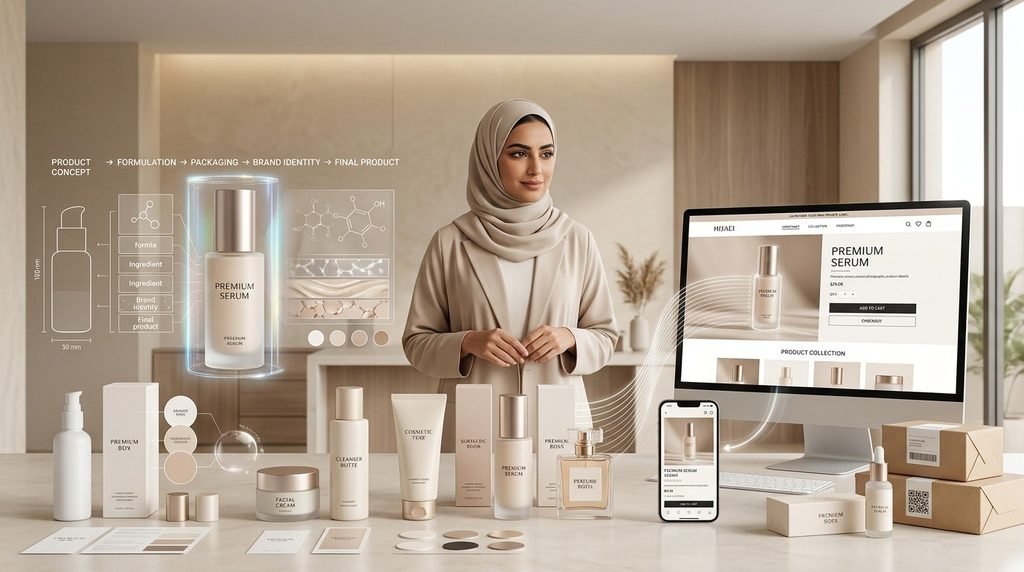
Private label means you create a product line and sell it under your own brand name. A manufacturer makes the products to your formula or specification, and your brand goes on the packaging. The product belongs to you, the brand belongs to you, and so does every customer relationship that grows from it.
This model gives you the highest margin of the four, because you’re not paying a brand’s markup. It also lets you build something customers can only buy from you.
The trade-off is that the responsibility moves to you. Your products need to be listed with the SFDA, and you’re responsible for the formulation, labeling and safety documents behind them. That work happens before you sell anything, so private label takes the longest to launch.
Running a Niche Curated Store
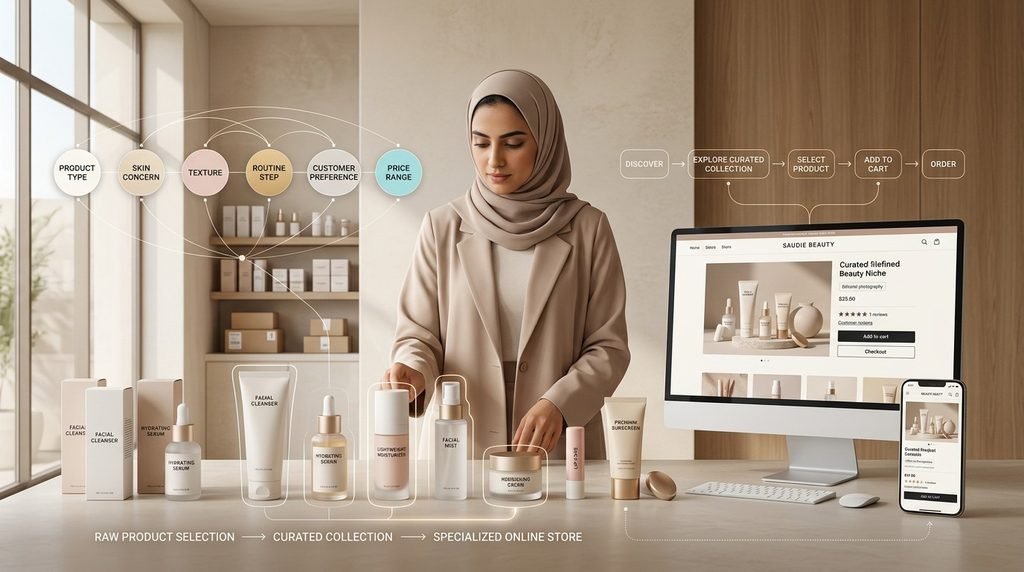
A curated store sells a small, carefully chosen range of products built around one focus. That focus might be halal-certified skincare, clean beauty made for the desert climate, men’s grooming, or Arabic-inspired fragrance. The products come from other brands, the same way they do in reselling, but you choose them deliberately instead of stocking everything.
The focus is what makes the model work. A shopper looking for something specific would rather buy from a store that clearly knows the topic than from a huge store with thousands of products. Trust becomes your main selling point, and price matters less.
A smaller range also keeps things manageable. You hold less stock, you know every product you sell, and you can explain each one properly on the product page. Curated stores still need every product to be legally listed, so the same listing checks apply as in reselling.
Dropshipping Cosmetics
Dropshipping means you list products on your store, but you never hold the stock. When a customer orders, your supplier packs the product and sends it straight to the customer. You pay the supplier and keep the difference.
The appeal is obvious: you don’t need money for opening stock or a place to store products. The cost is control. With cosmetics, storage conditions affect the product, batch and expiry dates matter, and every product sold in Saudi Arabia needs to be listed with the SFDA. When someone else holds and ships the stock, you’re relying on them to get all three right.
If a supplier sends a product that isn’t legally listed, or one that’s been stored badly, the customer sees your store’s name on the order, and your store takes the blame. Dropshipping only works when the supplier is reliable and can show proof of proper listings.
What Is the Best Platform to Sell Beauty Products Online?
The platform is the software your store runs on. It holds your product pages, takes payments, manages orders and connects to delivery companies. Every other part of your store depends on it, so this is one of the biggest technical decisions you’ll make.
A beauty store asks a lot from its platform. Shoppers need to choose between shades, sizes and variants. Product pages need full ingredient lists. Bundles and gift sets need to be priced correctly, and checkout has to work on a phone, because that’s where most Saudi shoppers will be.
Here’s what you should know before you compare platforms: signing up for one takes minutes, but setting it up properly takes technical work. Most store owners only find that out after launch, when something doesn’t work.
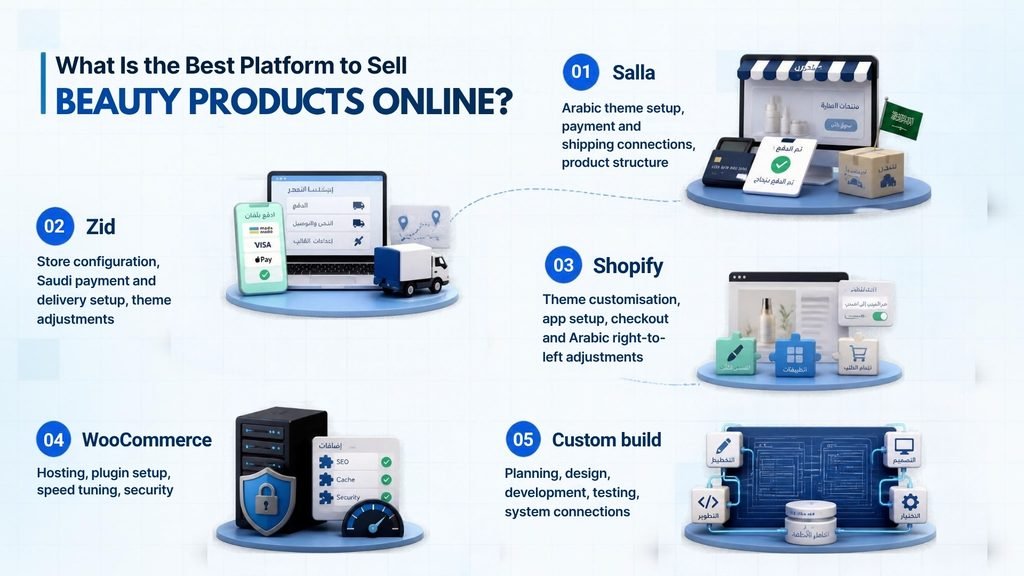
| Platform | Technical Work Involved |
| Salla | Arabic theme setup, payment and shipping connections, product structure |
| Zid | Store configuration, Saudi payment and delivery setup, theme adjustments |
| Shopify | Theme customisation, app setup, checkout and Arabic right-to-left adjustments |
| WooCommerce | Hosting, plugin setup, speed tuning, security |
| Custom build | Planning, design, development, testing, system connections |
Salla comes with Saudi payments, shipping and Arabic support available, but having them available and having them working well are two different things. Someone has to set up the Arabic theme so it reads properly right to left, connect the payment methods your customers use, link the right shipping companies, and structure hundreds of shade and variant options so they don’t confuse shoppers. A store that skips this usually looks fine on launch day and loses orders quietly afterwards. If you’d like to see how this is done properly, our Salla development services page explains how we set it up.
Zid works the same way: the tools exist, and the quality depends on how they’re configured. Payment settings, delivery rules and store layout all need to match how your products are actually sold.
Shopify gives you a large library of themes and apps, and that’s where the technical decisions start. Most themes aren’t built for Arabic, so right-to-left layouts, Arabic fonts and checkout wording need real adjustment. Every app you add also affects how fast your store loads, and a slow page on mobile sends shoppers straight back to search results. Choosing the right apps, and knowing which ones to leave out, is work for someone who’s done it before. Our Shopify development services show how we handle it.
WooCommerce gives you full control, and full control means you carry the technical side yourself. You’re responsible for hosting that can handle traffic spikes, plugins that don’t clash with each other, regular security updates and a site that stays fast as your product range grows.
A custom build is designed and coded around your exact requirements, so it can include things a ready-made platform can’t, such as a link to your stock system or a checkout built around your own process. It also needs proper planning, development and testing before it goes live.
Why does professional setup matter this much? Because a store’s technical foundation is hard to fix once orders are coming in. Payment errors lose sales. Broken Arabic layouts lose trust. Slow pages lose visitors before they see a single product. Rebuilding after six months of orders costs far more than getting it right on day one, and the customers you lose while it’s broken don’t always come back.
Compare platforms by what each one offers, but also by how ready you are to set it up properly, or who will do it for you.
How Do You Build a Beauty Store That Customers Trust?
Beauty is a trust purchase. Your customer can’t smell the perfume or test the foundation shade, so the store has to answer every question the product can’t.
Product pages come first. Each one needs the full ingredient list, size, usage instructions, and expiry or batch details. For makeup and skincare, add shade photos on different skin tones. Shades, variants and bundles also need to be set up correctly in the store, or you’ll see wrong stock counts and orders for shades that don’t exist.
Speed comes next. Most Saudi shoppers visit on a phone, and a slow page sends them back to search results before they see a product. Beauty stores are image-heavy, so compressing images and limiting apps or plugins makes the biggest difference.
Checkout needs to work first time. Offer Mada, Apple Pay and STC Pay, plus Tabby or Tamara for larger baskets. Each gateway (the service that processes the payment) should be tested with real transactions, including failed payments, refunds and order confirmations. If the customer’s usual method isn’t there, they don’t message you. They close the tab.
Security and reviews close the gap. An SSL certificate, PDPL-compliant data handling, clear delivery and returns policies, and an easy way to reach you on WhatsApp show a new buyer there’s a real business behind the store. Reviews with photos then do more than any banner.
Each of these parts has to work together. A slow page undoes good photos, and a broken checkout undoes good reviews.
How Do You Handle Shipping, Storage and Returns for Cosmetics?
Cosmetics behave differently from clothes in a box. Heat damages them. Expiry dates matter. And you can’t resell a returned lipstick.
Store stock somewhere cool and dry, especially through the summer months, since heat can spoil creams, serums and fragrance before they ever reach a customer. Track batch numbers and expiry dates from the first order, so you’re not guessing later.
For delivery, most Saudi stores work with carriers like Aramex, SMSA or Naqel. Compare them on delivery time to Riyadh and Jeddah, cash-on-delivery handling and packaging standards for liquids.
Returns need a clear written policy before launch. Most beauty stores accept returns only for sealed, unused or damaged items. State that on the product page and at checkout, so it doesn’t become an argument later.
What Is the Best Way to Sell Beauty Products Online?
There isn’t one channel that does it all. Online sales work through a marketing funnel, which is the path a shopper follows from first hearing about your store to buying from it. Each stage needs a different kind of marketing, and a store that only covers one stage leaves customers behind.
The funnel has four stages: awareness (people who don’t know you yet), consideration (people comparing options), purchase (people ready to buy), and retention (customers who’ve already bought). Here’s how the main channels fit each one.
Awareness: reach people who haven’t searched for you. Meta Ads (Facebook and Instagram), TikTok Ads and Snapchat Ads put your products in front of people based on their interests, age, location and behavior. Short videos of a product in use work best here, because a shopper who has never heard of your brand needs to see the product before they trust it.
Consideration: stay in front of people who are interested. Someone who watched your video or visited your store isn’t ready to buy yet. Remarketing (showing ads to people who already interacted with your store) keeps your products in front of them while they compare. Reviews, product pages and social content all work at this stage.
Purchase: catch people who are ready to buy. Google Ads shows your store when someone searches for exactly what you sell, such as “vitamin C serum Riyadh”. These shoppers already want the product, so this is where ad spend often converts fastest. SEO (getting your product and category pages to rank in search results without paying per click) does the same job, and it keeps working after your ad budget stops. A quick WhatsApp reply about shade, ingredients or delivery then turns a maybe into an order.
Retention: bring customers back. A first purchase is the most expensive one to win. Email, WhatsApp messages and loyalty offers bring existing customers back to reorder, and beauty products run out, so repeat buying is built into the category.
Channels work best when they’re connected. Meta Ads bring people in, remarketing brings them back, Google catches them when they search, and the store turns them into buyers. Set up separately, each one loses part of the value of the others.
How Much Does It Cost to Start an Online Beauty Store in Saudi Arabia?
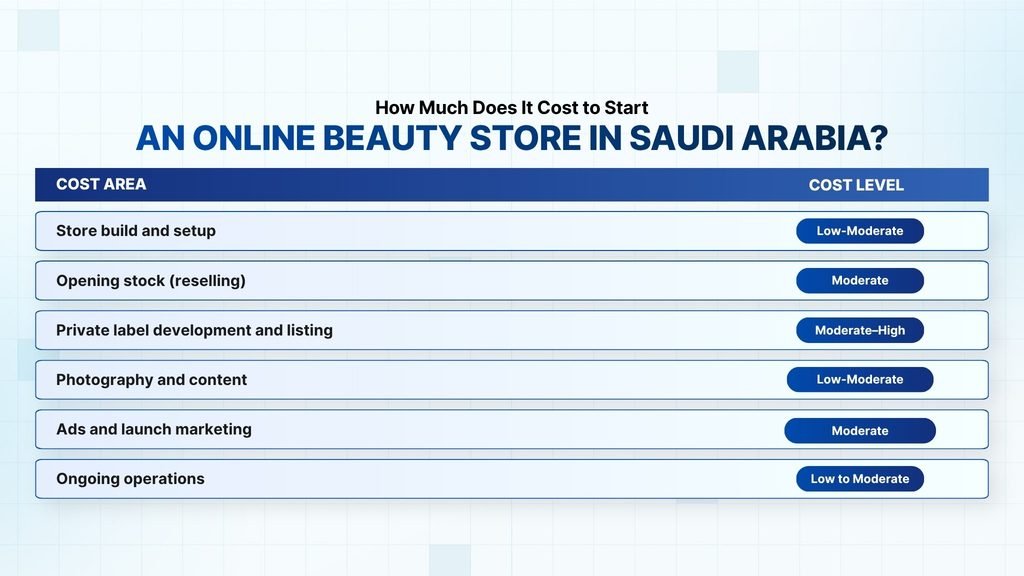
| Cost Area | Level |
| Store build and setup | Low to Moderate |
| Opening stock (reselling) | Moderate |
| Private label development and listing | Moderate to High |
| Photography and content | Low to Moderate |
| Ads and launch marketing | Moderate |
| Ongoing operations | Low to Moderate |
Cost depends far more on your model than on your store. A reseller and a private-label brand are spending money in completely different places.
What Drives Your Cost Up or Down
- Business model: private label costs more upfront than reselling because of formulation, testing and listing.
- Range size: every extra shade or variant adds stock, photography and page work.
- Platform choice: a ready-made platform keeps setup low, a custom build raises it.
- Launch marketing: a store that needs customers on day one spends more than one that grows slowly.
Mistakes to Avoid When Starting Online Beauty Stores in Saudi Arabia
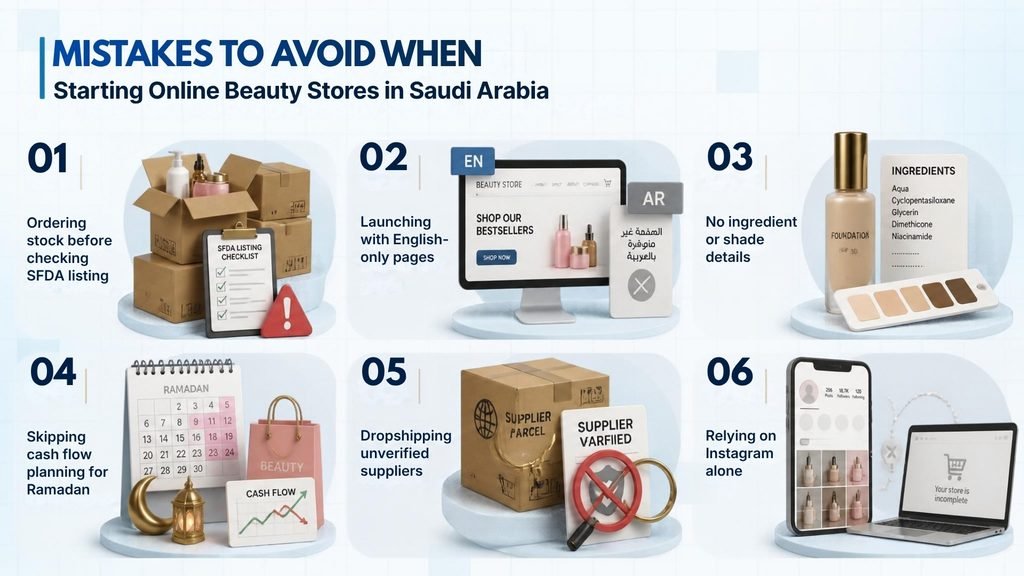
| Mistakes |
| Ordering stock before checking SFDA listing |
| Launching with English-only pages |
| No ingredient or shade details |
| Skipping cash flow planning for Ramadan |
| Dropshipping unverified suppliers |
| Relying on Instagram alone |
Why Work With Etihad Falcon Tech to Start Your Beauty Store?

You might be at the idea stage with a supplier and no store. You might have an Instagram page that sells well but can’t take payments properly. Or you might have a Salla store that’s live and not converting the way the traffic suggests it should. These are the situations we build for.
Built for How Saudi Shoppers Actually Buy
We don’t start with a template, we start with your customer: how she finds you, what she checks before she pays, and which payment method she expects to see. Then we build the store around that, in Arabic first, with Mada, Apple Pay, STC Pay, Tabby and Tamara set up properly.
One Team, Store to Sales
Most agencies hand you a website and disappear. We build the store on Salla, Zid, Shopify or WooCommerce, then run the search, social and paid campaigns that fill it. We’ve done this for a luxury fragrance brand entering a market full of established competitors: it earned PKR 5.6M in its first month, then grew sales 200% over the following year.
Compliant From Day One
We build with ZATCA e-invoicing and PDPL in mind from the start, so you’re not patching it later. On SFDA listing, we tell you honestly what you need to sort with your regulatory partner before stock is ordered.
If you’re deciding between reselling, private label or a niche store, or you already have the products and need the store and the customers, Message us on WhatsApp and tell us what you plan to sell and where you are right now. We’ll tell you honestly which platform and launch plan fits.
Frequently Asked Questions
Start with the legal side: confirm the products are SFDA-listed, or that you can list them yourself. Then choose your model, pick a platform, and build the store around a specific customer.
Yes. You need a commercial registration for the business, and the cosmetics themselves must be notified to the SFDA. Check the current requirements with a licensed advisor before ordering stock.
Salla or Zid suits most Saudi beauty stores because payments and shipping come ready. Shopify fits you better if you plan to sell outside the Kingdom.
Yes, if the business is registered and the products are legally listed. Storage matters, so keep stock cool and dry.
You can, but it’s risky. You can’t control storage conditions, batch dates or SFDA listing status, so only work with Saudi-based distributors who can prove their products are listed.
A reselling store can go live in a few weeks. A private-label brand takes longer because SFDA listing has to be finished first.
Mada, Apple Pay and STC Pay as a minimum. Add Tabby or Tamara for higher-value baskets.
We start with your customer and your model, then build the Arabic-first store and run the campaigns that bring buyers in. Message us on WhatsApp to walk through your plan.