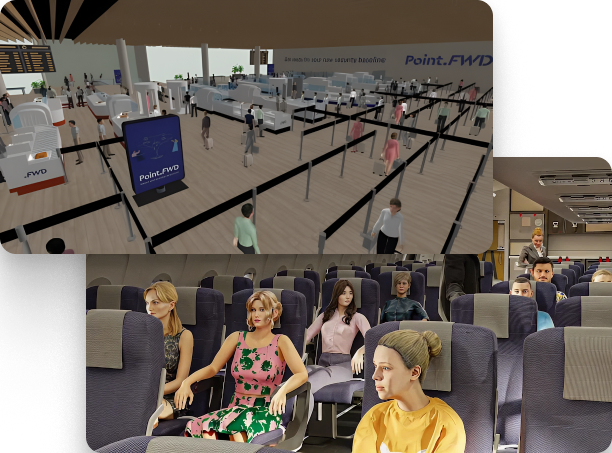
Some situations are too expensive, too dangerous, or too rare to train for in the real world. A pilot cannot practice emergency procedures mid-flight. A surgeon cannot rehearse a difficult procedure on a real patient. A new employee cannot experience a facility fire during onboarding. Simulation solves this, and we build the simulators that make it possible.
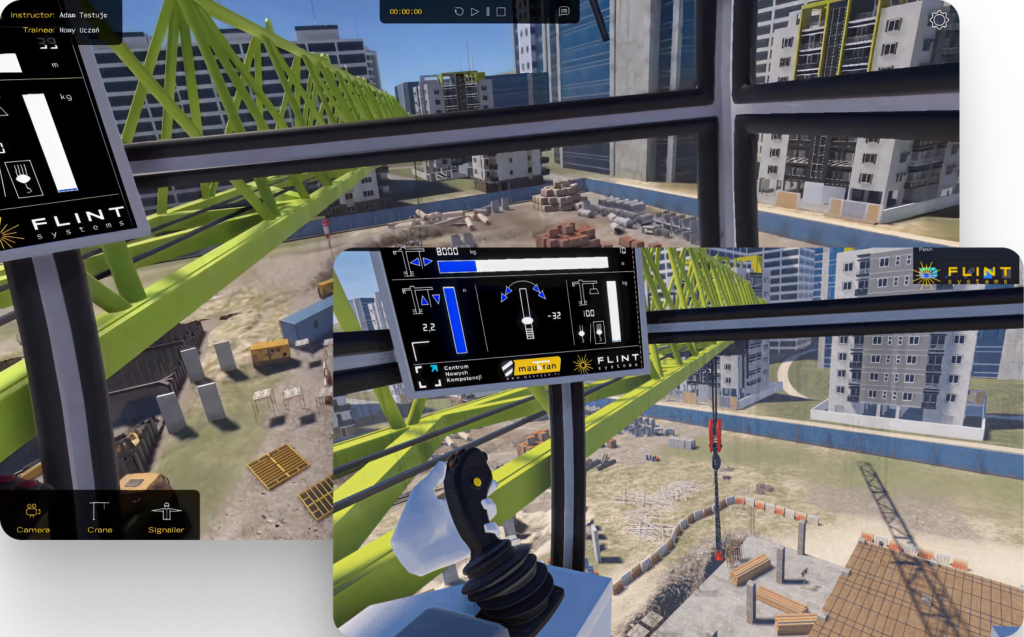


Training on the real system costs money, carries risk, and is often unavailable when you need it. We build training simulators that replicate real equipment, real environments, and real scenarios — so your team builds competence before they ever touch the actual machine, enter the actual facility, or make the actual decision. Used across healthcare, oil and gas, construction, aviation, and industrial operations.

Virtual reality simulation puts the trainee inside the scenario — not in front of a screen watching it. We build VR simulators for Meta Quest, HTC Vive, and PC-based VR systems, with environments detailed enough that the learned behavior transfers to the real situation. The result is faster skill acquisition and better retention than any classroom-based training can achieve.

Before you build a facility, change a production line, or redesign a workflow — simulate it. We develop process simulation tools that model how your operations actually work, allowing you to identify bottlenecks, test changes, and optimize resource allocation before any real-world change is made. Used in logistics, manufacturing, and infrastructure planning.

Fire response, equipment failure, chemical spill, crowd evacuation — these are the scenarios your team needs to know how to handle, but cannot practice in reality. We build emergency response simulators that put your team through realistic crisis scenarios, measure their decisions, and identify gaps in their response before a real incident reveals them.

Clinical procedures, diagnostic decision-making, patient communication, and emergency response — medical simulation allows healthcare professionals to practice without patient risk. We develop procedure training simulators, clinical scenario platforms, and diagnostic training tools for hospitals, medical schools, and healthcare organizations in Saudi Arabia.

Driver training that happens only on real roads is slow, expensive, and difficult to standardize. We build driving simulators for fleet training, heavy equipment operation, and logistics — with realistic vehicle physics, varied road and weather conditions, and structured scenarios that let trainers measure and certify competency objectively.

Complex operational scenarios — tactical decision-making, threat assessment, command coordination — require repeated practice that cannot happen in live environments. We build simulation platforms for defense, security, and law enforcement training with realistic scenario design, multi-participant environments, and structured after-action review.

Not every simulation requirement fits a standard category. If your organization has a specific process, a specific piece of equipment, or a specific scenario that needs to be simulated — we build it from scratch, designed around your actual environment and your specific training outcomes.
The cost of a simulation system is easy to calculate. The cost of a training gap — an accident, a wrong clinical decision, an emergency your team was not ready for — is much harder to recover from. Organizations that invest in simulation training consistently report faster onboarding, higher competency levels, and fewer real-world incidents. We build the systems that produce those outcomes.
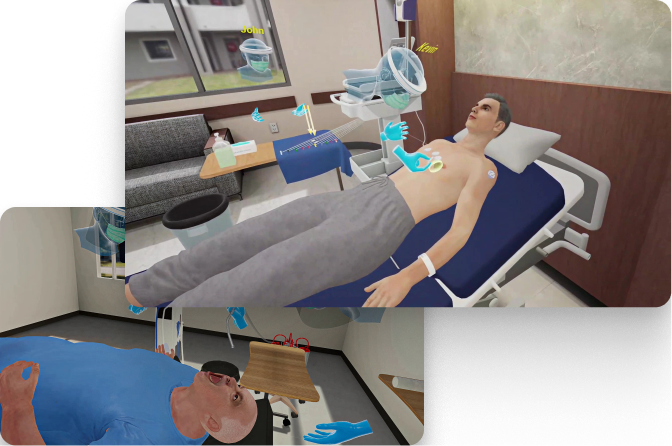
From healthcare facilities preparing clinical staff to industrial operators training teams on complex equipment, we build simulators that translate directly into real-world competence. The standard for simulation is simple: if the behavior learned in training does not transfer to the real environment, the simulator did not work. Ours do.
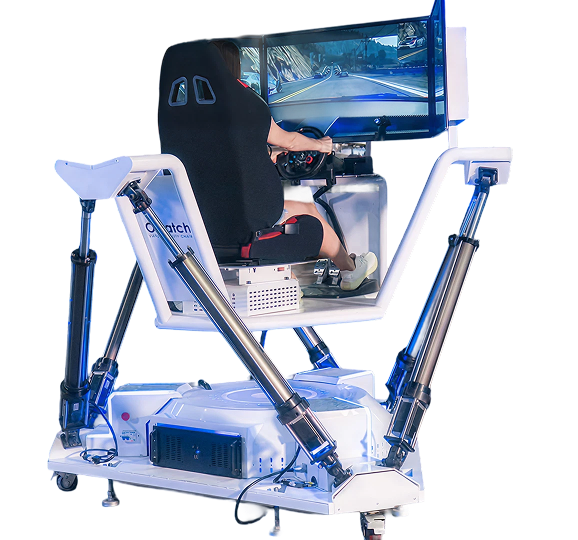

A simulator is only useful if it accurately reflects the real environment. We invest time understanding your actual equipment, your actual processes, and your actual training outcomes before we build anything. The result is a simulator your team recognizes as realistic — not a generic training tool with your logo on it.
Scenario design, 3D environment creation, physics modeling, UI development, and backend data systems — all handled by one team. No coordination between separate vendors, no gaps in responsibility, no surprises at delivery.

A simulator that does not measure anything is just an expensive game. We build performance tracking, scenario scoring, and reporting dashboards into every simulator — so training managers can see exactly how each trainee performed and where additional practice is needed.

Your training requirements grow as your organization grows. We build simulation platforms that can add new scenarios, new equipment models, and new user groups — without rebuilding the core system every time.
Every feature, every solution, built around what the businesses actually needed, earning 95% satisfaction across every industry we’ve served.


New equipment, new procedures, new regulations — your training scenarios need to reflect the real world your team works in. We add new scenarios, update existing ones, and expand the simulation library as your training requirements evolve.
The data your simulator generates tells you what your team knows and what they do not. We help you interpret training performance data and refine both the scenarios and the training process based on what the results show.
VR headsets update. Operating systems change. Hardware evolves. We maintain compatibility across your simulation platform so it continues to perform reliably as the technology around it changes.
A simulator that is unavailable on training day fails the people depending on it. We provide ongoing technical support — fast resolution for issues, proactive monitoring for performance, and scheduled maintenance that does not interrupt your training calendar.
Turning an idea into an app that actually scales takes more than good code, it takes a process that catches problems before they’re expensive. Here’s exactly how we do it.
We map the real-world environment, the target trainees, the specific scenarios to simulate, and the outcomes training needs to produce. Simulation that is not grounded in real operational reality does not produce real competence.
Scenarios, decision trees, environmental parameters, failure conditions, and scoring criteria — all designed before any development begins.
Equipment models, facility environments, character assets, and physics systems built to match the real environment your trainees work in.
Built in testable stages with working simulation builds for review throughout. Early testing with actual trainees identifies gaps before the full system is delivered.
Tested for accuracy against real-world conditions, for performance across target hardware, and for the reliability required in a training environment where consistency matters.
Installation, hardware configuration, user setup, and trainer onboarding — handled as part of the delivery process, not after it.
Early training sessions generate data and feedback that drives refinements. The simulation gets more effective as real trainees use it and as real performance data accumulates.
We don’t pick technology because it is popular. We pick it because it is right for your project, your users, and your business goals.










Healthcare, oil and gas, industrial and manufacturing, defense and security, aviation, construction, logistics, education, and government. If your operation has scenarios that are too dangerous, too costly, or too rare to train for in reality — simulation is the answer, and we build it.
That depends on the fidelity requirements and your budget. We build simulations from functional training tools with realistic decision logic to high-fidelity VR environments with accurate equipment physics. We recommend the fidelity level that produces the training outcome you need — not the most impressive demo version.
Yes. We build simulators with LMS integration using xAPI and SCORM standards — so training completions, performance scores, and session data feed directly into your existing training management system.
A focused single-scenario training simulator can be delivered in 3 to 4 months. A multi-scenario platform with complex 3D environments and advanced performance tracking takes 6 to 12 months. We scope accurately before committing to a timeline.
Yes. We build accurate 3D models of your specific equipment and replicate the controls, feedback, and behavior your team experiences in the real machine. Technical documentation and physical access to the equipment are required for accurate replication.
Yes. We build multi-user simulation environments where trainees can operate together in the same scenario — relevant for emergency response, team coordination, and command and control training.
You do. All scenario content, 3D assets, software, and data belong to your organization on project completion. No ongoing licensing fees unless you choose our support and maintenance service.
Tell us the scenario your team cannot safely train for in the real world — we will build the system that lets them practice it properly.