A data-driven digital funnel transformed the university’s admissions journey, turning online engagement into qualified leads and ultimately driving record-breaking student admissions.
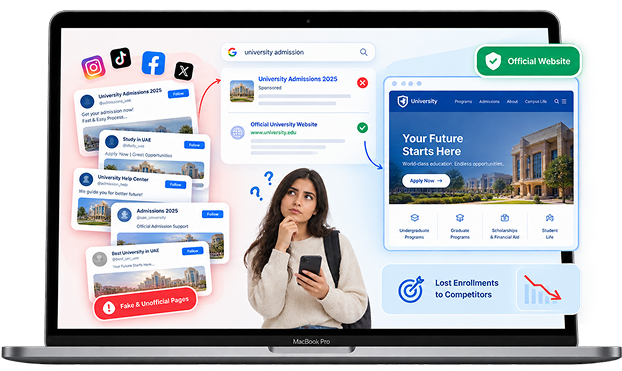
A prominent regional university with a strong academic reputation was losing enrollment to competitors. It had no verified digital presence, and dozens of unofficial pages on social media were actively confusing prospective students searching for admission information.
Two immediate consequences: prospective students were reaching fake pages before the real one, and every marketing dollar spent was going to waste with no verified destination to send traffic to.
Etihad Falcon Tech designed a conversion-first approach focused on turning a fractured digital presence into a high-performance admissions funnel, built to compete on efficiency rather than budget.
Running campaigns to unofficial pages or alongside competing fake accounts would waste every dollar allocated. The digital foundation had to be clean and authoritative before any traffic was directed toward it.
Generic landing pages do not convert high-intent applicants. Custom pages tied directly to the university's admissions system would eliminate drop-off between interest and application, and make every click trackable against a real enrollment outcome.
With a restricted budget and 60+ courses to promote, broad awareness spending was not viable. Facebook, Instagram, and Google campaigns had to reach students who were actively looking, not passively scrolling.
Without knowing which campaigns were producing actual enrollments, budget allocation was guesswork. ERP integration would make it possible to double down on what was working and cut what was not.
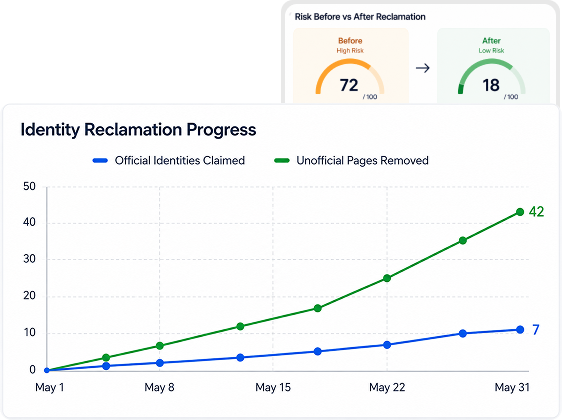
The first action was claiming all official social identities across platforms and clearing the unofficial pages that had been accumulating. This was not a background task. It was the prerequisite for everything else. A campaign that sends traffic to a fragmented, unverified presence produces distrust, not applications
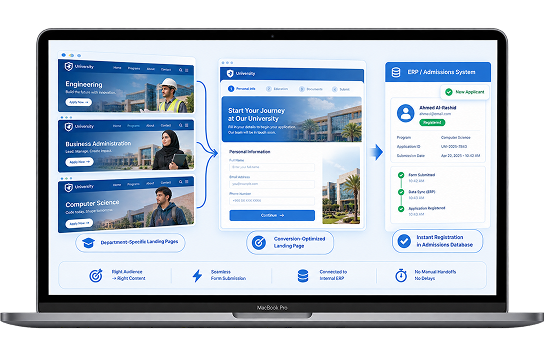
Etihad Falcon Tech developed conversion-optimized landing pages for the university’s course categories. Each page was built to match the intent of the ad that brought the visitor there and was connected directly to the university’s internal ERP system. This meant every form submission registered instantly as a real applicant in the admissions database, eliminating manual handoffs and follow-up delays.
Within one week of the initial audit, the full multi-channel campaign was live across Facebook, Instagram, and Google. Given the budget constraints, targeting was built around high-intent signals: students actively searching for admissions, program-specific interest signals, and geographic relevance. Broad audience spend was excluded.
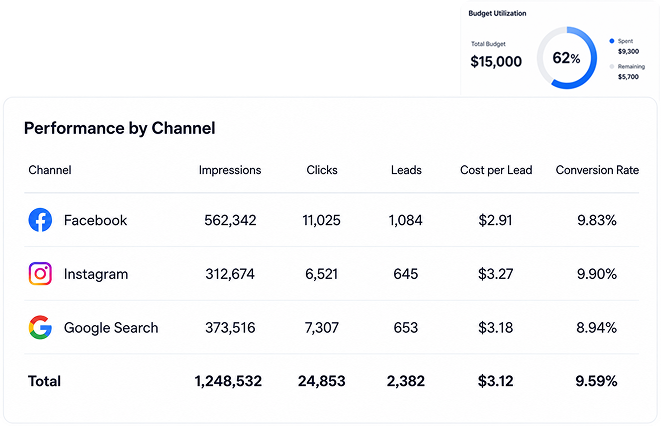
By connecting the marketing frontend to the admissions backend, Etihad Falcon Tech could track every applicant’s journey from first click to confirmed form submission. This visibility allowed continuous reallocation of budget toward the ad sets producing the highest confirmation rates, compounding efficiency across the campaign period.
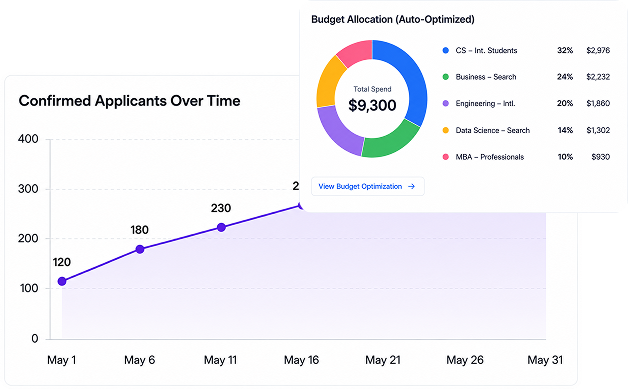
This is where the technical groundwork paid off.
The headline number is 6,655 confirmed admission forms from a $3,874 social spend. That is a cost per confirmed form of under $0.60. For a university competing against institutions spending multiples of its total budget, that efficiency margin is what made the campaign viable.
The 139 forms from Google Search matter for a different reason. Search traffic represents students who were already looking for a university, already in decision mode. A nominal spend on that channel captured high-intent applicants who were the closest to enrolling.
The 700+ confirmed enrollments in a single session, alongside $3,571 in prospectus sales within the first quarter, demonstrate that the funnel was not just generating form fills. It was producing students who followed through. That distinction separates a lead generation campaign from an admissions campaign.
The university entered the quarter with declining enrollment and no verified digital presence. It closed the quarter with over 700 new students and a clean, authoritative brand identity across every platform.
What Made the Difference
Most digital campaigns for educational institutions fail not because the budget is too small, but because the infrastructure underneath the campaign is broken. Fake pages, untracked forms, and generic landing pages mean that even well-targeted ads land somewhere unreliable.
Etihad Falcon Tech fixed the infrastructure first. Clean identity. Integrated tracking. Conversion paths built for each course category. That foundation meant every dollar spent on media had a verified, optimized destination to go to.
That structural fix is what turned a $4,024 total spend into 6,794 confirmed admission forms.
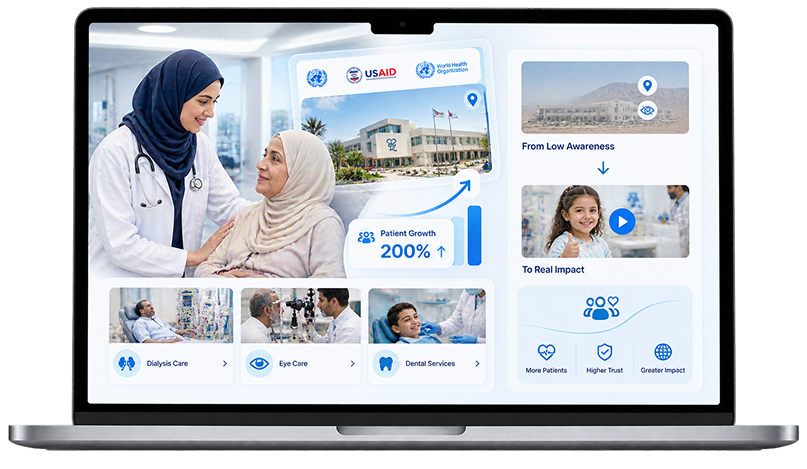
A healthcare nonprofit with world-class free services and international credibility was failing because the community did not know it existed. The location barrier meant passive marketing did not work.
Etihad Falcon Tech built a video-first strategy that turned awareness into action. Patients who were unreachable through traditional channels became regular, committed users of the hospital’s specialized services.
If your organization is operating services that deserve higher utilization, the barrier is rarely the quality of what you offer. It is awareness and trust, and video-based storytelling builds both.
Etihad Golden Falcons
As Salhiyah, Riyadh 12662