A theme customization and a custom build solve different problems. One changes how a store looks. The other builds the actual system, the workflow logic, the database, the integrations, when what you need does not exist inside Shopify, Salla, or WordPress no matter how much you configure them. We build custom web platforms from the ground up for businesses whose requirements outgrew what a platform was ever built to handle.
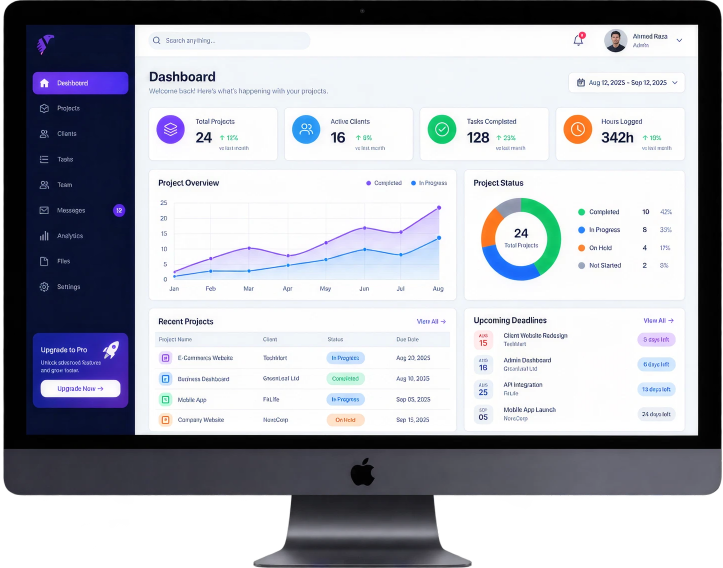


Some businesses run on logic no platform was built to hold, approval chains, role-based permissions, pricing that changes by customer type, inventory synced across systems that were never meant to talk to each other. We build the application from scratch, in React, Next.js, Node, or Laravel, around how your business actually operates, not how a template assumes it does.

A custom build starts with how the people using it actually work, not a component library with your logo dropped in. We design the interface around your specific users, internal teams, customers, or both, then build it to hold up as the system grows past its first version.

Multi-step approvals, conditional pricing, role-based dashboards, automated status changes, this is the logic that breaks a page-builder and is the reason a custom build exists in the first place. We architect the workflow before we write a line of interface code, so the system does not fall apart the first time a real edge case hits it.

Your custom platform rarely stands alone, it needs to talk to an ERP, a CRM, a payment gateway, an internal tool, or a government system. We build and maintain those integrations directly, so data moves between systems without someone manually re-entering it twice a day.

Saudi Arabia’s Personal Data Protection Law is not the same requirement as ZATCA compliance, and it applies the moment your platform stores customer or user data. We architect authentication, data storage, and consent handling to meet PDPL requirements from the first line of backend code, not as a retrofit after a warning letter.

Where a platform gives you a plugin, a custom build gives you a direct integration, connecting to ZATCA’s Fatoora API, GOSI for payroll systems, or Nafath and Absher where identity verification is required. We build these connections at the API level so they hold up under real transaction volume.

A platform’s database is built for a generic store. A custom backend is built for exactly what you are running, whatever that inventory, user, or transaction structure actually looks like. We design the architecture for the data relationships your business has, not the ones a platform assumed everyone would have.

A custom build needs infrastructure decided deliberately, not defaulted to whatever hosting came free with the platform. We set up cloud hosting with the right data residency for Saudi compliance, along with security controls aligned to NCA’s baseline standards.
Every platform, no matter how flexible, is built to solve the same problem for thousands of businesses at once, which is exactly why it stops working the moment your business needs something specific. A custom build is not a bigger version of a store on a platform. It is software built around your workflow instead of your workflow bent to fit someone else’s
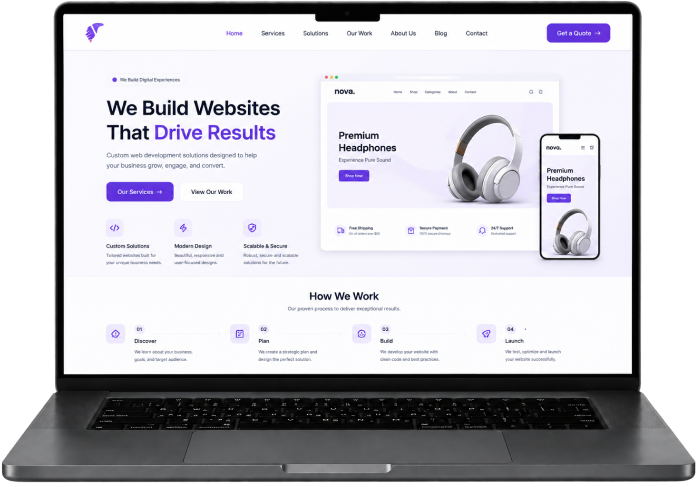
As a custom web development company working across Saudi Arabia, we build platforms for businesses whose requirements, internal tools, complex catalogs, multi-system integrations, regulated data, do not fit inside an off-the-shelf platform. Every system we build is architected for what your business actually does, not adapted from a template that almost fits.
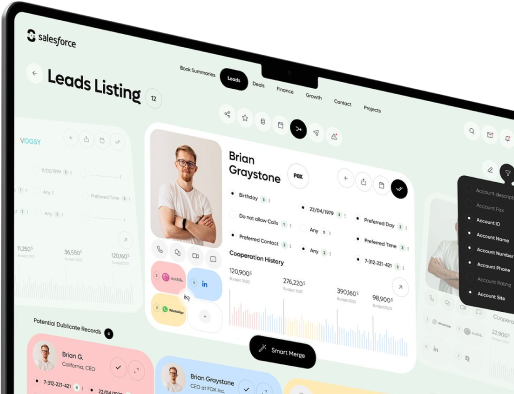

A custom build that starts with screens instead of data structure ends up rebuilt within a year. We map the workflow and the database first, so the interface is built on something that can actually hold it.

We build in focused stages and show you a working system as it comes together, not a single reveal at the end. You give feedback while it is still easy to change.

Design, architecture, development, integrations, compliance, and launch, one team, full responsibility. You are not coordinating a design agency, a backend team, and a compliance consultant separately

The system we launch today should not need a rewrite when your transaction volume triples or you add a new business unit. We architect for growth from the first data model, not the first screen.
Every feature, every solution, built around what the businesses actually needed, earning 95% satisfaction across every industry we’ve served.


A custom system is never really finished, the business it was built for keeps changing. We build new features and workflow changes as your operation evolves, on the same architecture instead of bolted on top of it.
A slow system costs you more the bigger it gets. We monitor server load, database performance, and response times, and fix bottlenecks before they show up as complaints.
NCA’s cybersecurity controls and PDPL’s enforcement activity are not static, they update, and so do the vulnerabilities. We keep your system’s dependencies, access controls, and compliance posture current.
Third-party APIs change their requirements without much warning. We keep your integrations, ZATCA, payment gateways, ERP connections, working when the systems on the other end update.
A Salla store that performs is not the default theme with your logo on it. We plan the brand direction, the expansion path, and the store architecture from the first stage, not as fixes after launch.
We understand your business logic, your existing systems, and where the current setup breaks down, before we design or write anything.
Database structure, tech stack, integration points, and hosting decisions, made before development starts so the build does not stall on a decision made too late.
Every screen is designed around how your actual users work, internal teams, customers, or both, not a generic component library.
We build the backend architecture, the integrations, and the interface in focused stages, with a working system you can review at each point.
Every workflow, every integration, and every user role gets tested against real scenarios before your team or customers touch the system.
We manage the go live carefully, infrastructure setup, data migration if needed, and a monitored launch window, so the switch to a live system does not disrupt operations already running.
After launch, we track how the system is actually being used and refine based on real data, not assumptions made before launch.
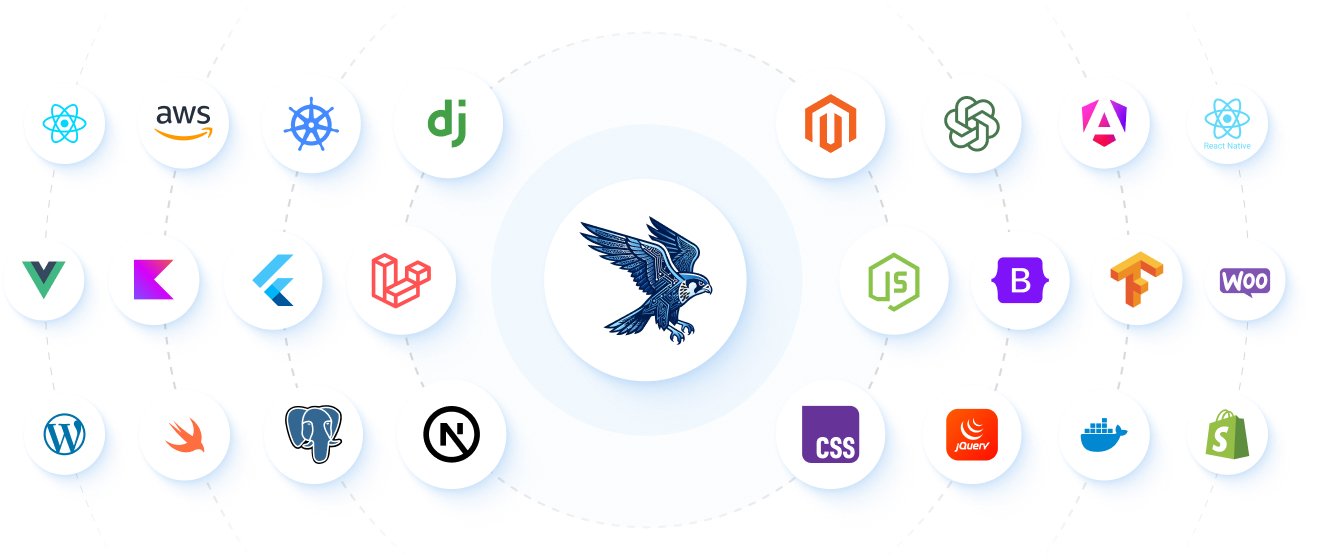
We don’t pick technology because it is popular. We pick it because it is right for your project, your users, and your business goals.










A platform, Shopify, Salla, WordPress, gives you a system built for thousands of generic stores and lets you configure it. Custom development builds the system itself, the database, the workflow logic, the integrations, around your specific business. If your requirements fit inside a platform with some configuration, custom development is more than you need. If they do not, no amount of configuration will get you there.
If your workflow involves approval chains, role-based access, non-standard pricing logic, or integrations with internal systems that platforms do not support natively, that is usually the signal. We will tell you honestly if a platform can actually handle what you need, some businesses do not need custom development, and building one anyway just adds cost and maintenance.
The Personal Data Protection Law governs how Saudi businesses collect, store, and process personal data, separately from ZATCA’s tax and invoicing rules. If your system handles customer or user data, which almost all of them do, PDPL applies. We architect for it from the start rather than retrofitting it later.
Yes. We build direct integrations with ERP, CRM, and other internal systems so data moves automatically instead of being re-entered manually across platforms.
For custom builds, we connect directly to ZATCA’s Fatoora API rather than relying on a plugin, which gives more control over invoice generation, cryptographic stamping, and handling higher transaction volume without the limitations a plugin architecture runs into.
It depends on scope. A focused system with a handful of integrations typically takes 8 to 14 weeks. A standard multi-module platform runs 14 to 22 weeks, and an enterprise system with multiple government integrations can run 22 to 36 weeks. We give you a real timeline once we understand your requirements.
We deploy to cloud infrastructure with data residency that meets PDPL and NCA requirements, typically within the Middle East region, and configure security controls aligned to NCA’s Essential Cybersecurity Controls baseline.
You do, fully. The code, the architecture, and the data belong to you, with no platform to migrate away from later. Hosting and any third-party service costs are billed directly by those providers.
If your business runs on logic a template was never built to hold, tell us how it actually works. We will build the system that runs it.