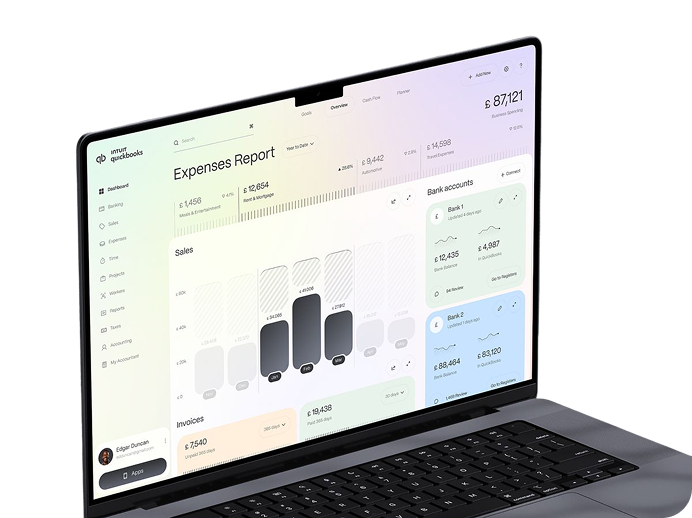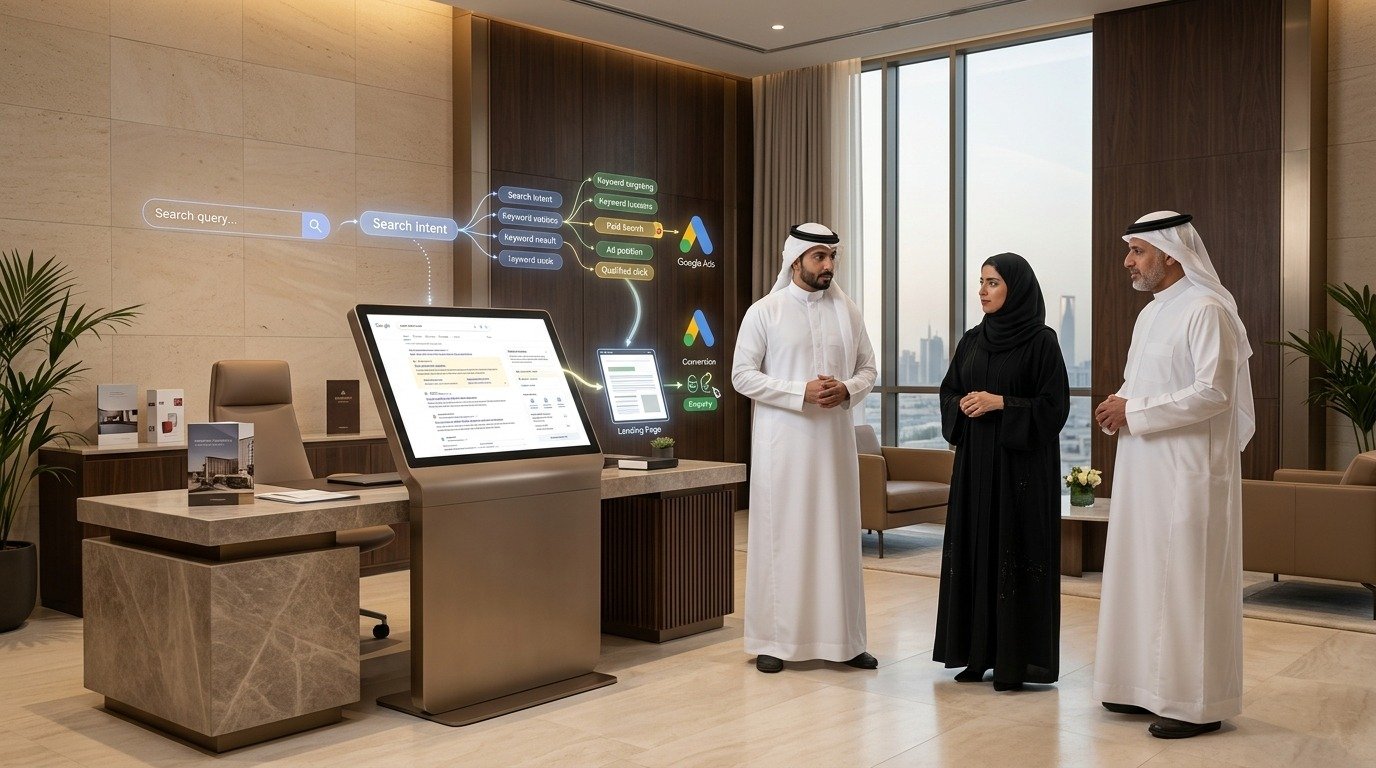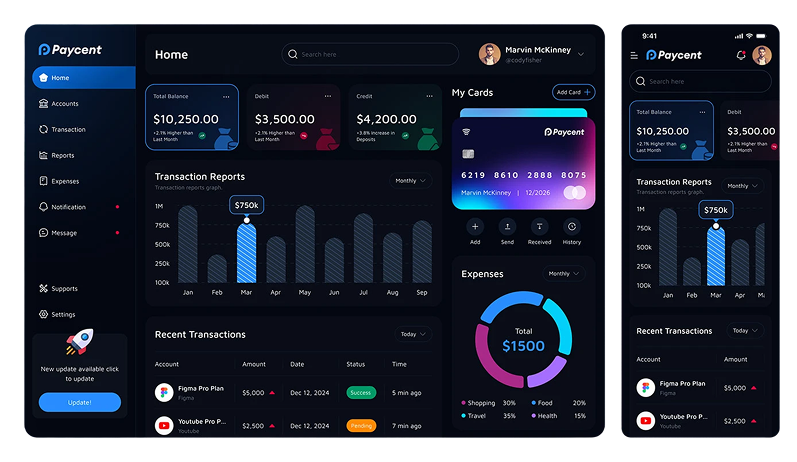
Building a financial product is not like building other software. The regulatory environment is strict, the security requirements are non-negotiable, and the margin for error in a system that handles people’s money is effectively zero. We build FinTech products for the Saudi market with SAMA compliance, KYC/AML workflows, and enterprise-grade security engineered in from day one — not added after the fact.


Building a digital bank — or digitizing the operations of an existing one — requires more than a mobile app and a backend. It requires a core ledger infrastructure, real-time transaction processing, multi-channel customer interfaces, and a compliance architecture that satisfies SAMA at every layer. We build end-to-end digital banking platforms for neobanks, credit unions, and traditional institutions making the transition.

Investment platforms built for the Saudi market need to handle Shariah compliance requirements alongside standard financial regulations — and they need to do it without sacrificing the user experience that drives adoption. We build investment platforms around your specific asset classes, your risk models, and your regulatory environment.

Financial fraud doesn’t announce itself. It exploits the microseconds between a transaction being initiated and being approved. We build real-time fraud prevention systems with biometric authentication, behavioral analytics, and AI-driven anomaly detection that identify suspicious patterns before damage is done — not after.

For FinTech products that need tokenization capabilities, smart contract functionality, or DeFi protocol integration, we connect your platform to blockchain networks in a way that’s seamless for your users and compliant with applicable regulations.

Your compliance team needs audit trails. Your risk team needs real-time exposure visibility. Your executive team needs performance dashboards. We build financial intelligence systems that give every stakeholder the specific view of financial data they need — accurate, real-time, and always audit-ready.

Saudi Arabia’s financial regulatory environment is evolving. SAMA requirements change. ZATCA compliance expands. KYC and AML obligations tighten. We build RegTech systems that automate compliance workflows, monitor regulatory updates, and keep your platform audit-ready across all applicable jurisdictions — so compliance is a capability, not a continuous fire drill.
The financial products that succeed in Saudi Arabia’s market aren’t just technically sound — they’re built with a deep understanding of the regulatory environment, the user expectations, and the operational requirements specific to this market. We bring all three.
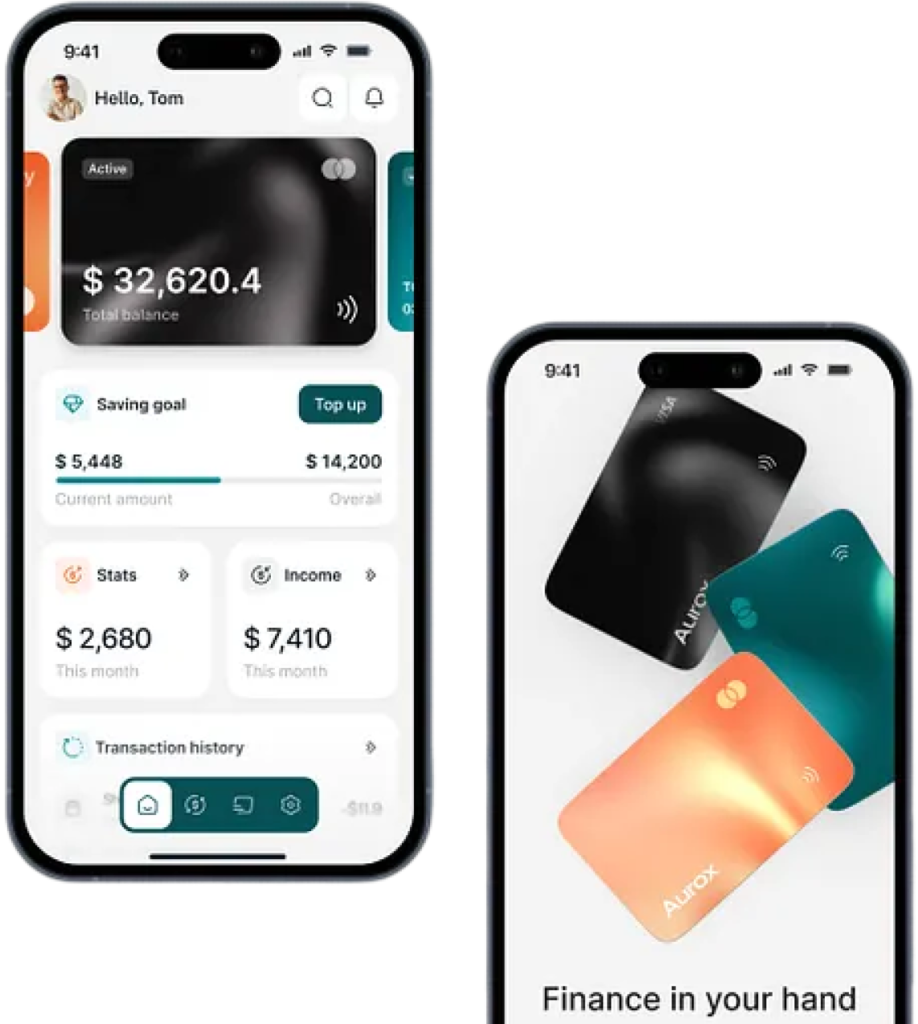
Saudi Arabia’s Vision 2030 financial sector transformation is creating significant opportunity for FinTech innovation. The organizations best positioned to capture it are the ones building on a solid compliance and technical foundation now.


Every FinTech product we build starts with the regulatory framework — SAMA guidelines, KYC/AML requirements, PCI DSS, and applicable data protection obligations. Compliance is not a layer we add at the end. It’s the foundation everything else is built on.

Your business model, your user base, your asset classes, and your risk appetite are specific to you. We design your platform around them — not around a generic FinTech template.

Discovery, architecture, development, QA, regulatory review preparation, and launch — we own the full product lifecycle. You don’t need separate compliance consultants, security auditors, and development teams. We manage it all.

A payment platform that processes 10,000 transactions a day needs different infrastructure from one handling 10 million. We build for the scale your product will reach — with redundancy, failover, and disaster recovery designed in from the start.
Every feature, every solution, built around what the businesses actually needed, earning 95% satisfaction across every industry we’ve served.


We monitor transaction throughput, API response times, system uptime, and anomaly signals continuously — because in FinTech, performance degradation is a compliance risk, not just a user experience issue.
Failed API integrations, data sync errors, authentication failures, UI breakdowns — we resolve critical FinTech issues immediately. In financial products, a bug that affects a transaction is not a minor inconvenience.
SAMA updates its guidelines. New security vulnerabilities emerge. KYC/AML requirements evolve. We keep your platform current with all applicable regulatory changes — so you’re never caught non-compliant.
New financial products, new asset classes, new payment method integrations, expanded market access — we evolve your platform as your business grows into new opportunities.
Security, compliance, and scale don’t work as separate add-ons in financial software; they have to be solved together. We build all three in from day one, not patched in after launch.
We assess your financial product concept against the regulatory landscape before a single architecture decision is made. SAMA requirements, KYC/AML obligations, target market dynamics, and your competitive environment — all mapped in this phase. The output is a roadmap that’s technically viable and regulatorily defensible before build begins.
In FinTech, architecture decisions are compliance decisions. We design your core infrastructure, data segregation model, encryption architecture, API security layer, and audit logging framework — all before development starts. Every structural choice is made with SAMA guidelines and applicable international standards in view.
Financial products live or die on user trust. Interface design is where that trust is either built or lost. We design experiences that communicate security and clarity — because a user who doesn’t feel confident about what’s happening to their money won’t complete the transaction.
Core transaction infrastructure is built first. User-facing features come next. Advanced capabilities follow. Each stage includes security testing before the next begins — because discovering a vulnerability after three stages of features have been built on top of it is an expensive problem.
FinTech QA goes well beyond standard functional testing. We run security testing, penetration testing, load testing under peak transaction scenarios, and compliance validation — because a system that handles money gets tested harder than anything else we build.
We manage the production launch with regulatory review support, security audit documentation, and a staged rollout designed to contain risk. The first weeks in production are monitored closely — transaction behavior in a live environment always surfaces things a test environment doesn’t.
After launch we monitor transaction patterns, anomaly signals, user behavior, and compliance indicators. In FinTech, post-launch data isn’t just a product improvement input — it’s a risk management tool. What we find here drives the next phase of development.
We don’t pick technology because it is popular. We pick it because it is right for your project, your users, and your business goals.










Yes. Every FinTech product we build for the Saudi market is designed around SAMA’s regulatory framework — from the Open Banking framework to consumer protection requirements to cybersecurity guidelines. SAMA compliance is not an afterthought in our builds.
We integrate with leading KYC/AML platforms and build custom verification flows depending on your risk model and user base. This includes document verification, biometric authentication, PEP screening, sanctions list checking, and ongoing transaction monitoring.
End-to-end encryption, secure API gateway, network segregation, access control, audit logging, and regular penetration testing — these are standard components of every FinTech build. Data residency requirements for Saudi-based financial data are accommodated from the architecture phase.
Yes. We have experience building investment and banking platforms that incorporate Shariah compliance requirements — profit-sharing models, restriction on prohibited asset classes, and Shariah supervisory board reporting.
A focused FinTech product — a digital wallet, a payment gateway, a micro-investment platform — typically takes 4 to 7 months from discovery to launch. More complex platforms with multiple financial products, extensive regulatory requirements, or enterprise integrations take longer.
Yes. E-invoicing and financial reporting integration with ZATCA is a standard component of any FinTech build that involves financial transactions in Saudi Arabia.
FinTech products built on a weak foundation fail expensively — in regulatory penalties, in security breaches, or in user trust. Tell us what you’re building — we’ll make sure it’s built on the right foundation.